
On this page
Quick answer: is a north-east bedroom bad?
In many Vastu interpretations, a north-east room is not the first choice for the main bedroom. That traditional preference does not establish that sleeping here will harm your health, marriage or finances. If this is your only suitable bedroom, you can continue using it while addressing real comfort and safety needs.
Start with a clear route to the door, usable windows, manageable light and temperature, and storage that fits. If you also want to follow directional preferences, test a bed arrangement with the head toward south or east where practical. Do not sacrifice safe access to achieve it.
Use the sleeping-direction guide and bedroom planning guide for related decisions.
What the north-east direction means in bedroom planning
The traditional rationale is keeping the northeast relatively open and often reserving it for prayer or similar uses. These are cultural planning associations, not a diagnosis of a room or its occupants. Sun exposure, roof and wall construction, shading, noise and ventilation must be assessed separately.
Locate the room before arranging the bed
Mark north on the whole-home floor plan and identify the room’s position relative to the home’s centre. Then mark north again on a separate sketch of the room. The room’s location, the direction its window faces and the direction of your head while sleeping are three different things.
If the plan is irregular or the bedroom spans more than one zone, describe that uncertainty rather than forcing a precise label. See irregular floor plan Vastu for a whole-home assessment.
Best bed placement in a north-east bedroom
Head direction means the direction your head points while lying down. A headboard against the south wall generally puts the head toward south and the feet toward north; it does not mean facing south while sitting up. South or east are common traditional preferences, not medically established requirements.
On a measured sketch, draw the bed, door swing, wardrobe opening and window access. Try the preferred arrangement only if all remain usable. A corner labelled southwest is not itself a head direction: the bed could point different ways within that corner.
If the bed cannot move, keep the workable position. Check that the frame is secure, overhead items are safe and both occupants can get out as needed. A mirror only needs adjustment for an actual issue such as reflected glare or personal discomfort; its reflection does not prove harm.
Colours, lighting and materials that suit a north-east bedroom
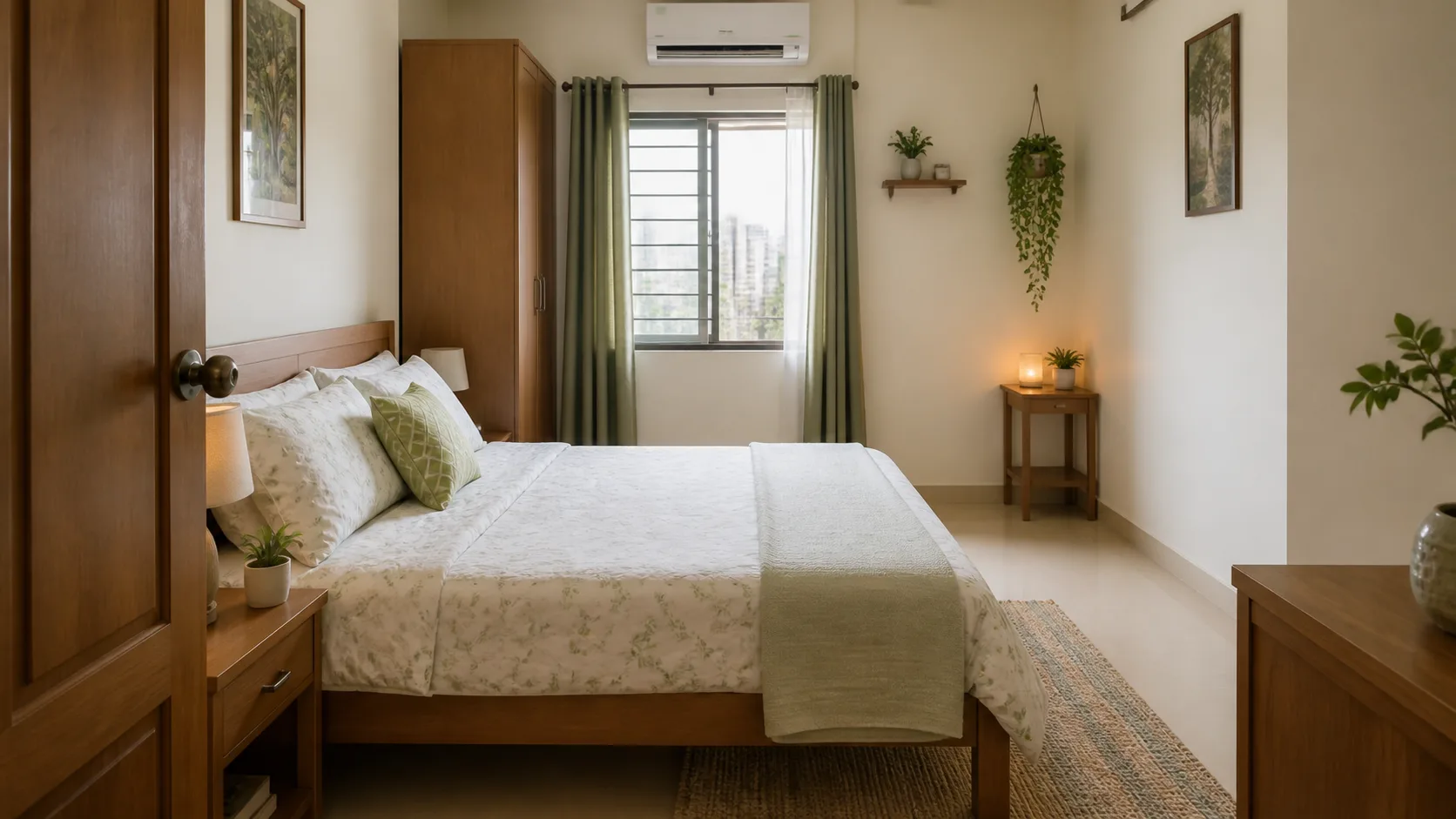
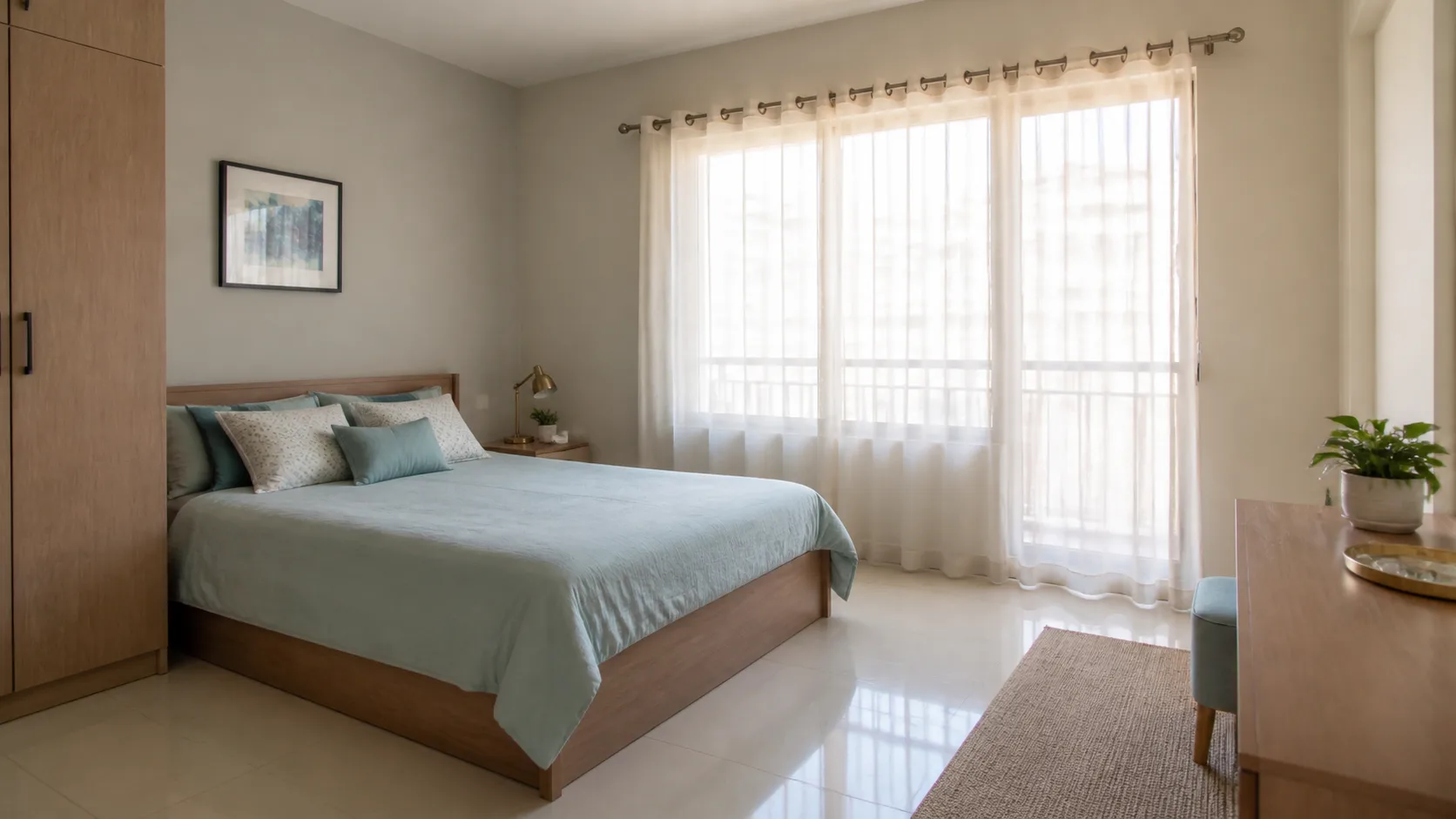
Soft colours usually work best. Use warm white, ivory, pale blue, light green, gentle beige or a muted clay-neutral. These shades support the lighter nature of the direction without making the bedroom feel clinical. Avoid very dark feature walls, heavy red, deep maroon, harsh black accents and busy wallpaper in the north-east corner.
Lighting should feel layered, not harsh. Morning daylight is helpful, but glare at night can disturb sleep. Use sheer curtains for daytime softness and a second curtain layer if privacy or heat is a concern. A warm bedside lamp is better than one glaring ceiling light. If the room has a study table, keep task light focused and switch it off before sleep.
Natural textures help the room feel grounded without making it heavy. Cotton bedding, wood or wood-look furniture, woven rugs and simple curtains are enough. Avoid filling the room with too many metal shelves, plastic storage towers or reflective decor. If you want plants, use one healthy low-maintenance plant near light, not a crowded plant stand that blocks circulation.
Wardrobe, storage and furniture rules
The north-east corner should not become the dumping zone. Avoid tall wardrobes, heavy trunks, lofts, stacked cartons or unused suitcases there. If the wardrobe already sits on that side, reduce its visual weight: keep shutters closed, remove items stored on top, avoid dark laminate if repainting is possible, and keep the floor in front of it clear.
Some Vastu interpretations prefer south or west for wardrobes; check door and window positions first. These directional preferences are traditional; adequate storage and safe access matter in every position. Study tables, dressing units and TV consoles should also be placed with care. The bedroom should remain a sleep-first space, not a hybrid storage room that happens to contain a bed.
Under-bed storage is acceptable when it is neat and necessary, but do not store broken items, old papers, unused electronics or sentimental clutter under the bed. Keep seasonal bedding in clean boxes. Remove anything that smells damp. Clutter can obstruct cleaning and access in any room; northeast orientation does not amplify it.
Practical examples for Indian apartments
These are hypothetical planning examples, not reports of measured outcomes.
Example A: movable bed and wardrobe
Sketch the room with north up. Suppose the door is on the west and the window on the east, as in the diagram. A south-wall headboard may leave a route along the west side and access to the window. Check the actual door swing and furniture dimensions before moving anything. If the wardrobe blocks that route, change the arrangement rather than squeezing past it.
Example B: fixed bed and built-in wardrobe
A rental has a north-wall headboard and a fitted cupboard that cannot move. Rotating the bed would block the door. Keep the bed in place, clear the exit route and test curtains for unwanted light. Use the cupboard normally, keep its doors usable and remove loose items stored overhead. A directional preference does not justify making the room harder to use.
For couples sharing the only bedroom
Choose the arrangement that gives both people access, privacy and comfortable sleeping conditions. You do not need matching bedside furniture or another bedroom to make the space usable. Discuss noise, lighting and storage preferences together; do not attribute relationship problems to the compass direction.
North-east bedroom correction table
| Observed problem | First adjustment | How to assess it |
|---|---|---|
| Door or wardrobe cannot open freely | Move movable furniture or choose a smaller item. | Check full opening and an unobstructed walking route. |
| Unwanted light reaches the pillow | Adjust curtains or move the lamp causing glare. | Check the room at the time you actually sleep. |
| Room feels too warm | Check sun exposure, shading and ventilation; service cooling equipment when needed. | Compare comfort under similar weather conditions. |
| Work or screen use interrupts bedtime | Set a stopping time and dim unnecessary light. | Note whether the routine is easier to maintain. |
| Concern is only a Vastu direction | Treat a safe furniture change as an optional preference. | Do not interpret unrelated events as proof that a remedy worked. |
Pooja corner, study desk and electronics
Some families keep a small prayer shelf in a north-east bedroom because the direction feels suitable. If you do this, keep it clean, modest and respectful. Avoid placing it beside laundry baskets, shoe storage, cosmetics or a cluttered dressing table. If the bedroom is used by a couple, choose the arrangement according to family comfort and privacy.
A study desk can work in a north-east bedroom when it does not take over the sleep zone. Keep books organised, wires hidden and the work surface clear before bedtime. For detailed desk direction ideas, see Study Room Vastu and Home Office Desk Vastu.
Electronics should be restrained. A TV opposite the bed, bright charging lights, routers, laptops and late-night work can make any bedroom restless. Apply the same practical checks regardless of the room’s direction. Keep devices away from the headboard and switch off unnecessary lights at night.
When should you consider renovation?
Consider renovation only when the room has repeated practical problems: poor sleep, severe dampness, no ventilation, unsafe wiring, impossible storage or a layout that blocks every usable wall. Even then, renovation should solve real problems, not only chase a directional rule. Changing room usage may be easier than breaking walls.
If your home has another bedroom in the south-west, west or south, you may use that as the master bedroom and convert the north-east room into a guest room, meditation room, study or light-use bedroom. If not, keep the existing room and improve it patiently. Good Vastu often comes from reducing friction, not forcing dramatic changes.
Before any structural work, compare the full home layout with Complete Home Vastu Planning and Balanced Layout. The whole-house pattern matters more than one isolated room label.
Quick checklist
Keep NE light
Clear the exact north-east corner and avoid heavy wardrobes there.
Ground the bed
Keep the bed stable and preserve access to doors and windows.
Use calm colours
Choose colours you find comfortable; paint shades do not provide ventilation.
Control mirrors
Adjust mirrors only for reflected glare, discomfort or safe placement.
Reduce electronics
Keep sleep zones quiet and avoid bright charging lights near the head.
Clean regularly
Remove hidden clutter, damp items and unused storage from the room.
Frequently asked questions
Is north-east bedroom good as per Vastu?
North-east is traditionally kept lighter and calmer, so it is usually not the first preference for a master bedroom. If the bedroom already exists there, use practical remedies: keep the room light, uncluttered, well ventilated and avoid heavy storage in the north-east corner.
Who can use a north-east bedroom?
Choose occupants according to comfort, privacy, accessibility and household needs. Traditional room preferences do not establish that a direction is unsafe for a particular age group.
Where should the bed be placed in a north-east bedroom?
Keep doors, windows and storage usable. If you follow traditional preferences, try the head toward south or east, but retain a safe existing arrangement when rotation would block access.
Which colours are best for a north-east bedroom?
Off-white, pale blue, gentle green or neutral shades are optional decorating choices. Pick a palette you like and test samples in the room. Actual heat control needs attention to exposure, shading and ventilation.
Can couples sleep in a north-east bedroom?
Yes. Use the room if it meets your needs. Traditional directional preferences do not establish that a room causes relationship problems. Prioritise access, privacy and comfortable sleeping conditions.
What is the easiest remedy for north-east bedroom?
Start with the problem you can observe: clear a blocked route, manage unwanted light or address overheating. A symbolic directional concern alone does not require a purchase or renovation.
Should wardrobes be kept in a north-east bedroom?
Use wardrobes on the south, west or south-west wall if the layout allows. Avoid tall heavy storage in the exact north-east corner.
Is a mirror allowed in a north-east bedroom?
Yes. Adjust a mirror if reflected light or its position bothers you, and secure it safely. A reflection of the bed is not evidence of harm.
Can a pooja corner be kept in a north-east bedroom?
A small clean prayer shelf may work in some homes, but avoid mixing it with clutter, laundry, shoes or heavy storage. Keep it respectful and separate from the sleep zone.
Should I renovate only because my bedroom is in the north-east?
Not automatically. First check practical comfort, sleep quality, ventilation, clutter and furniture placement. Use no-demolition remedies before considering structural changes.
Conclusion
Use this north-east bedroom guide to distinguish traditional preferences from the changes your room actually needs. Start with access, light, temperature and usable storage. Keep safe arrangements that work, and evaluate optional changes by everyday comfort rather than promised luck or outcomes.
Sources and how to use this guide
Directional preferences here describe commonly followed Vastu interpretations, which vary between practitioners. They are not established causes of health, relationship or financial outcomes. The illustrated layouts are educational examples, not measured plans or client case studies.
For practical sleep-environment advice, see the National Heart, Lung, and Blood Institute’s healthy sleep habits. Its guidance supports a quiet, cool, dark sleeping environment; it does not validate Vastu directions or symbolic remedies. Persistent sleep problems deserve appropriate professional advice.