
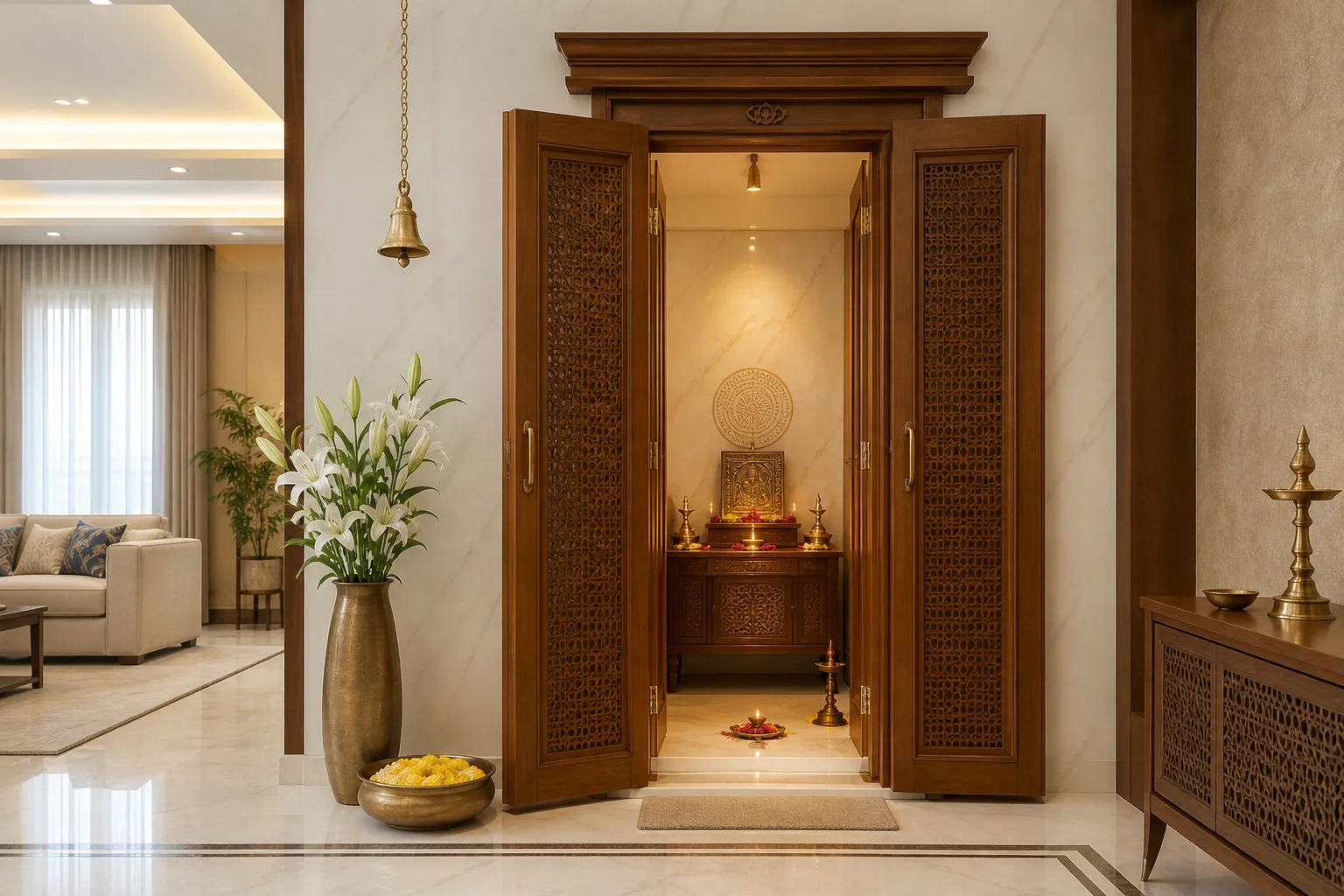
Pooja room Vastu in one sentence
Choose the best available calm corner (often North-East if possible), keep it clean and uncluttered, use gentle light, and follow safe diya/incense habits so the space stays peaceful and easy to maintain.
Premium rule
The pooja shelf should not become a storage shelf. A dedicated space stays powerful.
Safety rule
If you use flame or incense, ensure ventilation and fire safety. Calm should never become risky.
Consistency rule
One small daily routine beats an occasional complex setup. Simple and consistent feels premium.
Direction is guidance
If NE is not available, pick the quietest clean corner and protect it from dampness and clutter.
Ideal direction
Many Vastu traditions prefer the North-East (Ishanya) for pooja or meditation because it is traditionally associated with clarity, light, and calm. Actual daylight depends on windows, climate, and neighbouring buildings; the compass direction does not guarantee it.
Not every home has a NE room available. Apartments may have fixed layouts. If NE is not possible, select the corner that is quiet, clean, and away from wet zones (bathrooms, laundry areas). A pooja space beside dampness or heavy storage often feels uncomfortable over time.
Preferred (common)
North-East is widely suggested for pooja/meditation due to light and calm association.
If NE isn’t possible
Pick the quietest corner, keep it clean, and avoid dampness and storage clutter around it.
Best colors (calm and clean)
Pooja room colors should support calm. Choose light tones that look clean in daylight and warm light at night. The goal is a space that feels easy on the eyes.
Best base colors
Warm white, ivory, soft beige, light cream—peaceful and easy to maintain.
Accent colors
Soft saffron, muted gold, gentle teal (small details like cloth, frame, or backdrop).
Avoid overload
Too many bright colors and objects can feel visually noisy. Premium pooja spaces feel simple.
Placement tips (setup that stays peaceful)
A pooja room can be a full room or a small corner. Either way, treat it like a small “sanctuary”: clean surface, safe light, and minimal distraction. The placement tips below work in independent houses and apartments.
Keep it away from wet zones
Avoid placing a pooja shelf directly against a bathroom wall if possible. Dampness affects comfort and maintenance.
Stable surface
Use a stable cabinet or shelf. A wobbly setup creates stress and is unsafe for diya use.
Gentle lighting
Warm light (lamp/LED) supports calm. Avoid harsh glare that makes the space feel restless.
Ventilation for incense
If you burn incense, ensure airflow. Smoke should not linger in the house.
How to arrange the pooja shelf (practical rules)
A peaceful pooja space has a clear focal point, not a crowded surface. Arrange the shelf so your eyes see one simple, tidy setup. Keep daily-use items reachable and store occasional-use items separately. This prevents the “slow clutter” that happens over months.
- Back wall: keep the backdrop simple (light color or a single clean panel).
- Center: keep the main idol/photo arrangement centered and stable.
- Sides: keep small utilities (matchbox, lighter, bell) inside a small closed box.
- Floor: avoid using the pooja area floor as storage for cartons, papers, or random items.
Many families follow a preferred prayer orientation. Practices vary by tradition and household, so distinguish the altar location from the direction a person faces. Arrange seating or standing space comfortably and consult your own tradition for devotional details rather than treating a general layout guide as a religious requirement.
Common mistakes
Most pooja problems are “use problems”: the space slowly becomes storage, or the setup becomes hard to clean. Fix those issues and the corner becomes peaceful again.
Mistake: storage pile-up
Fix: keep only essentials. Store extras in a separate box inside a cabinet, not on the pooja surface.
Mistake: dusty, hard-to-clean setup
Fix: simplify. Choose fewer items that are easy to wipe and keep the surface clear.
Mistake: unsafe diya/incense
Fix: use safe holders, keep flammables away, and ensure airflow. Calm must include safety.
Mistake: pooja in a busy passage
Fix: use a screen or choose a quieter corner. Constant movement reduces the feeling of calm.
Another common mistake is placing pooja under a staircase or inside a cramped storage nook. Sometimes it is the only option. If that’s your case, keep the setup extremely minimal, add warm light, and keep the surrounding storage closed and tidy so the corner doesn’t feel like a utility space.
Renters: pooja room Vastu without renovation
In rentals, you may not be able to add permanent shelves or change the layout. The best rental-friendly solution is a neat cabinet with doors, or a portable pooja shelf that can be moved. Your aim is still the same: dedicated, clean, calm, and safe.
Portable cabinet
A cabinet with doors hides items and keeps the room looking premium when guests visit.
Removable lighting
Use a small warm lamp or LED strip to make the corner feel dedicated and calm.
Routine over renovation
A 2-minute daily reset keeps the space powerful. No renovation can replace consistency.
Illustrative example: a 1BHK without a dedicated prayer room
Consider a 1BHK where the North-East corner is a balcony and the available indoor space is beside the dining area. A dedicated cabinet could provide a prayer surface and storage, provided the dining chairs and household walking route remain usable. Check it with doors open and someone seated for prayer, not only when it is closed.
If the only alternative is in the bedroom, discuss privacy and use with everyone sharing that room. Near a kitchen, protect sacred objects from splatter and steam. Follow the household's practice for placement and handling; this layout example does not prescribe a universal religious rule.
Do’s & don’ts
Do: keep it clean
A clean surface is the simplest expression of respect and calm.
Do: keep it dedicated
Avoid using the pooja cabinet for random items. Separation keeps the energy clear.
Do: use gentle light
Warm light reduces visual stress and makes the corner inviting.
Don’t: keep clutter under it
Avoid keeping shoes, bins, or messy storage directly under the pooja shelf.
Don’t: place it near dampness
Avoid damp corners and leaky walls. Dryness supports cleanliness and calm.
Don’t: overcomplicate
A simple, consistent setup feels more premium than a crowded, high-maintenance setup.
Remedies (no demolition)
If your home doesn’t have a perfect pooja room location, you can still create a peaceful corner. The best remedies are practical: define a boundary, reduce visual noise, and keep the space clean.
Create a boundary
Use a small screen, a cabinet, or a curtain to separate the pooja area from busy movement paths.
Improve lighting
A warm lamp and a tidy backdrop makes the corner feel dedicated and premium instantly.
Reduce items
Choose fewer items and arrange them neatly. Visual calm supports mental calm.
Keep air fresh
If you burn incense, ensure airflow and avoid smoke build-up inside the home.
Idols, photos, and shelf setup (keep it respectful and simple)
Many people get stuck on small rules: which idol height is correct, how many items are allowed, or what should face which direction. The most useful approach is simple: the pooja space should feel respectful, clean, and easy to maintain. If the setup becomes complicated and dusty, you’ll stop using it regularly.
Keep the shelf at a comfortable height so you don’t strain. If you use lamps or diyas, use safe holders and keep the area heat-resistant. A premium pooja space is not crowded—it is intentional. You should be able to wipe the entire surface in under a minute.
Fewer items, better arrangement
Choose essentials only and keep extra items stored in a closed box. Too many items create visual noise.
Easy-to-clean surface
Avoid fragile clutter. Select materials you can wipe quickly so the setup stays consistent.
Safe diya/incense
Keep flame away from cloth and paper. Ventilate so smoke does not linger in bedrooms.
Pooja in apartments (small space, modern reality)
Most modern homes don’t have an extra room for pooja. That’s fine. The common apartment-friendly solutions are a pooja cabinet in the living room, a wall-mounted shelf, or a corner in the dining area that stays dedicated. The key is to keep the pooja zone separate from daily mess and storage.
If the only available place is near the kitchen, keep it away from oil splatter and steam. If the only available place is in a bedroom, keep it calm, simple, and not near damp attached bathrooms. When space is limited, simplicity becomes the premium choice.
Best apartment setup
A dedicated cabinet with closed doors, gentle lighting, and minimal items—easy to keep tidy.
Avoid
Placing the pooja shelf above shoes, bins, or messy storage. The visual message matters.
Myths vs facts (pooja edition)
Myth: you need a separate room
Fact: a clean, dedicated corner works well in most homes. The intention and maintenance matter more.
Myth: more objects = more power
Fact: clutter reduces calm. Premium pooja spaces are minimal and consistent.
Myth: one wrong direction ruins everything
Fact: direction helps when planning, but cleanliness, safety, and a calm routine decide the lived experience.
Myth: incense smoke is always fine
Fact: ventilation matters. Smoke build-up can make the home feel heavy and irritate sensitive people.
Using lamps and incense in a compact prayer space
Check the prayer setup as it will be used, including an open cabinet door, hanging cloth, nearby curtain, and the position of anyone sitting or passing. A shelf that holds an unlit lamp may not provide a suitable space for using a flame. Keep burning items on stable, heat-resistant holders with appropriate clearance from combustible materials.
Do not leave a diya, candle, or burning incense unattended, and extinguish it before leaving or going to sleep. Never close cabinet doors around a flame or smouldering incense. Let holders and ash cool before handling them; keep matches, refills, and lighters secured away from children. Ventilation should not create a draught that carries flame or embers toward cloth.
If safe clearances or supervision are not possible, consider an electric light for illumination and discuss any devotional alternatives with your family or trusted religious adviser. This is a safety choice, not a claim that one practice is spiritually equivalent to another. USFA candle-safety guidance likewise stresses supervision and extinguishing candles before leaving a room.
30-day maintenance rhythm
A pooja space becomes “special” when it stays consistent. Use a simple monthly rhythm so the setup never becomes dusty storage.
Weekly
Wipe the surface, clear ash safely, and keep the surrounding floor clean.
Monthly
Review items and remove anything that is slowly becoming clutter. Reset the arrangement neatly.
Seasonal
Refresh cloth, lamps, and small accessories. Keep the palette calm and consistent.
Ongoing
Keep incense/diya use safe and ventilated. Calm includes comfort and health.
If the pooja space starts to feel “less peaceful,” it is usually because clutter has returned or the corner has become dusty. Don’t add more items—remove items. Resetting to a simpler arrangement almost always restores the calm feeling quickly.
A helpful habit is to keep a small “pooja-only” box inside the cabinet for matchsticks, extra wicks, and refills. When everything has a place, the surface stays clean and the corner stays calm with very little effort.
Pooja room checklist (print-friendly)
Direction
NE preferred if possible; otherwise quietest clean corner.
Cleanliness
Dust-free, uncluttered surface, easy-to-clean setup.
Lighting
Warm, gentle lighting; avoid harsh glare.
Safety
Safe diya/incense holders; ventilation; no flammables close.
Boundary
Protected from busy movement paths; use screen if needed.
Routine
Small daily reset keeps the calm intact.
Families: kids, pets, and modern life
In many homes, the pooja space is shared with family activity. Kids may be curious, and pets may wander. The goal is not strict perfection; it is a safe, respectful, calm setup that works in real life. If you use a diya, treat safety as non-negotiable: use a stable holder and keep flammable cloth away.
If you prefer incense, keep it light and ventilated. A pooja space should never make the home smoky or uncomfortable. The easiest upgrade is to use a gentle lamp and keep the space fresh. Calm is the true “premium” outcome.
FAQ
Is North-East mandatory for pooja?
No. NE is a common traditional preference, but many homes don’t have NE space available. Choose the quietest clean corner and keep it dedicated. A clean, calm space is more important than forcing a rule that doesn’t fit your home.
Can I keep pooja in the living room?
Yes. Many families do. Use a cabinet or shelf that stays dedicated and keep the area uncluttered. If the living room is busy, create a small boundary with a screen or a layout change so the pooja corner feels protected.
Is it okay to keep pooja near the kitchen?
It can work if the area stays clean and smoke/steam does not affect the setup. Avoid placing the pooja shelf where oil and cooking odors constantly collect. A dedicated clean corner is the main rule.
Can I close a prayer cabinet while a diya or incense is burning?
No. Do not close doors around a flame or smouldering incense. Supervise burning items, keep combustible materials clear, and extinguish them before leaving. If the cabinet cannot provide a safe setup, use non-flame illumination and discuss devotional choices within your own tradition.
Summary: what makes a pooja space feel premium
Choose the best available calm corner, keep it dedicated, and make it easy to maintain. The premium pooja room is not the biggest—it is the one you can keep clean every day. Direction guidance helps when you have choices, but cleanliness, safety, and routine create the peaceful feeling most families want.
If you want a simple upgrade checklist: remove non-pooja storage, add warm lighting, keep one closed box for small utilities, and ensure the surrounding floor is clean. These small changes protect the “calm zone” and make the space feel intentional. When the setup is easy, you use it more—this is the most practical way to honor the tradition in a modern home.
Keep it simple, keep it clean, and you will feel the difference every day at home.