
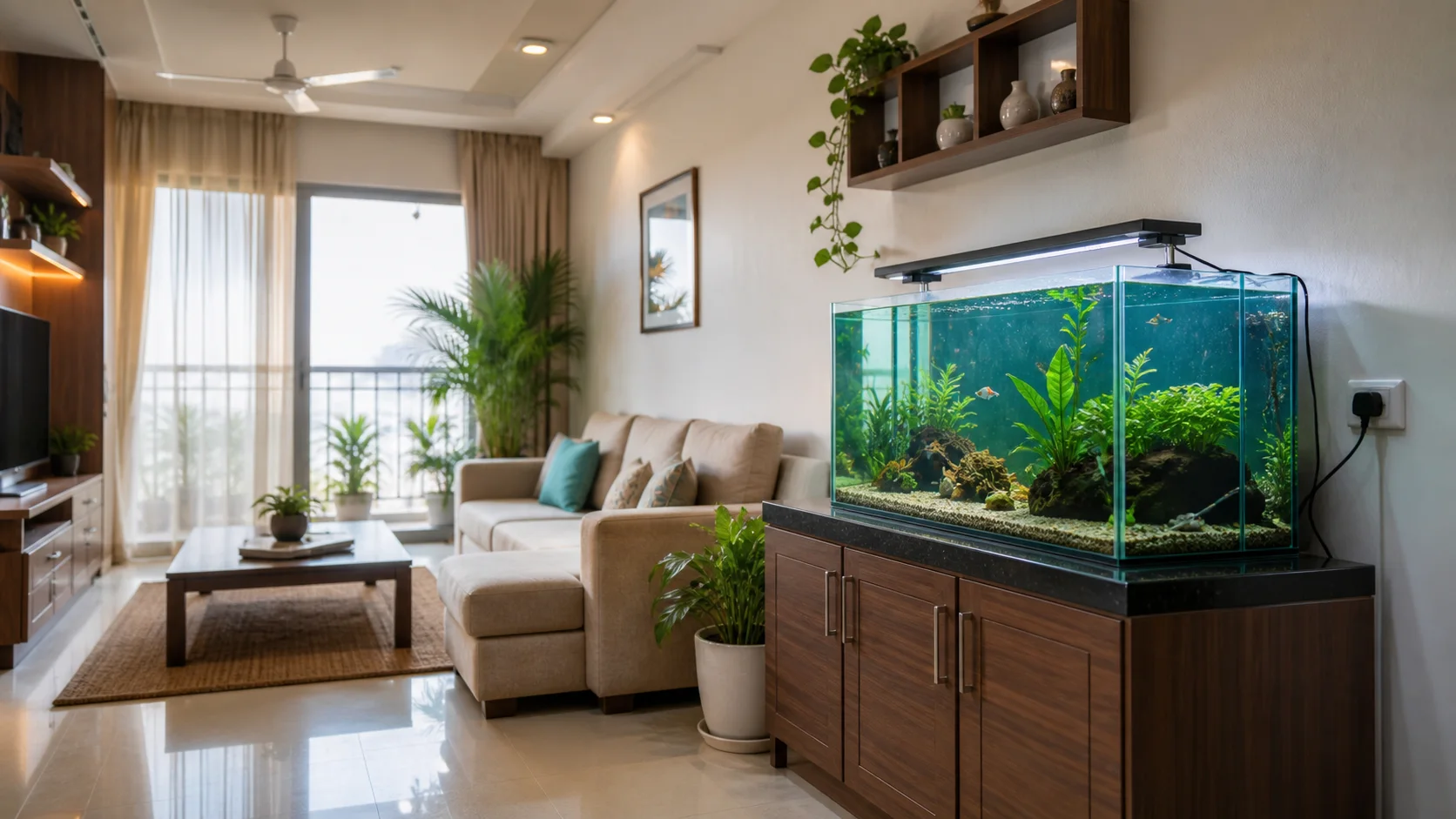
An aquarium is a living habitat with a maintenance commitment, not simply a water ornament. Choose its position before purchasing the tank: the location must support its filled weight, allow routine care and suit the animals you intend to keep. A visually attractive corner is not enough if the filter cannot be reached or water changes would cross an unsafe route.
Traditional placement preferences come after suitability
Some Vastu traditions prefer North for an aquarium, with North-East and East considered alternatives. These are cultural placement preferences, not evidence that a tank brings wealth, luck, career success or improved relationships. Do not buy fish as a remedy or move an established aquarium just to meet a compass label.
If none of those locations can provide suitable support, equipment access and environmental conditions, choose a better practical position or postpone the aquarium. Proper husbandry takes priority over symbolic placement. The compass reference can help identify a direction; it cannot assess the tank's suitability for fish.

Check the support before the tank is filled
Allow for the complete setup, including water, tank, substrate and equipment, when discussing support with the supplier. Use a stand intended for that aquarium and follow its installation requirements. A decorative console should not be assumed suitable because the empty tank fits on it.
The support and floor need to be appropriate for the installation. Seek qualified advice where capacity is uncertain, especially for a large aquarium in an apartment. Do not attempt to move a filled tank or improvise supports beneath it; arrange any relocation according to the manufacturer's and aquarium professional's guidance.
Check the household route past the tank. Opening a nearby door, carrying shopping or pulling out a chair should not bring people into contact with the glass or projecting equipment. Keep the setup away from places where it is likely to be knocked or climbed on.
Observe sunlight and nearby heat through the day
The RSPCA's aquarium environment guidance recommends a sturdy surface and a position away from direct sunlight and heat sources. Check the proposed location at different times: a shaded corner in the morning may receive strong afternoon sun.
Excess light can contribute to algae problems, but algae should not be treated as a direction problem or solved by randomly adding treatments. Tank lighting and temperature management must suit the actual setup. Ask a knowledgeable aquarium professional about the needs of the intended inhabitants rather than using household decorative-lighting rules.
Leave access to curtains or blinds without reaching across the tank. Avoid a location beside a radiator, cooking heat or another source of temperature disturbance. Room appearance should be planned around the aquarium's operating needs, not the other way around.
Plan water changes as carefully as the display
Rehearse the maintenance route while the space is empty. Where will suitable water be prepared, where can care equipment be placed, and how will used water be removed? Carrying containers through a narrow passage or across electrical leads is a reason to rethink the position.
Leave enough working space above and around the aquarium to open its cover and service the filter according to its instructions. A built-in recess can look neat but become impractical if the lid or equipment cannot be removed. Ask the installer to demonstrate access before committing to cabinetry.
Keep dedicated care items together and away from household cleaning chemicals. Protect suitable surrounding surfaces during maintenance, deal with splashes promptly and inspect for leaks. Towels are useful during a water change but are not a permanent answer to leaking equipment or a wet cabinet.
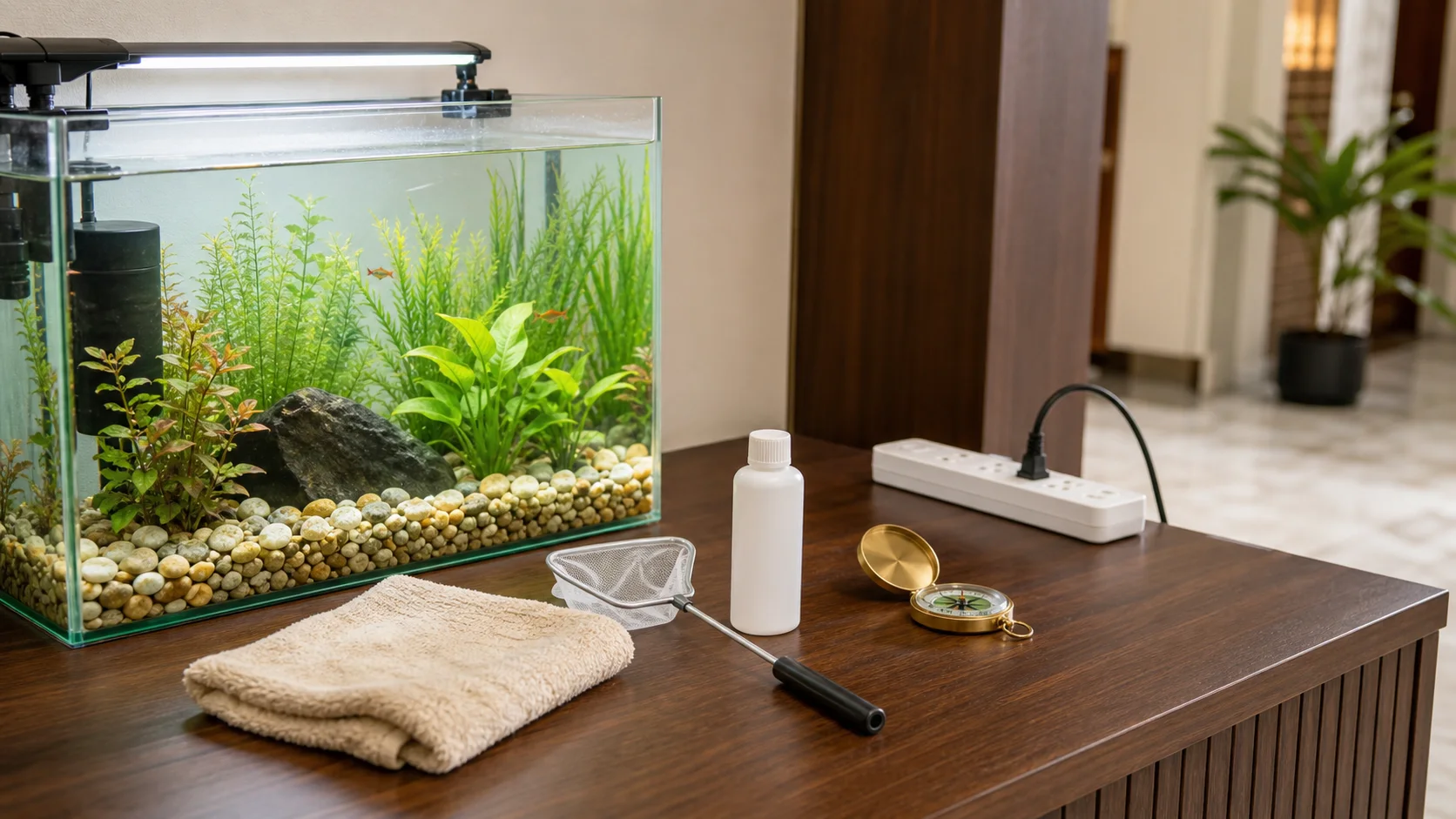
Keep electrical equipment accessible and protected
Have an appropriate electrical supply available without trailing leads through the walking or water-change route. Follow the aquarium equipment's instructions for cable routing, including any specified drip-loop arrangement, and keep connections protected from splashes. A qualified electrician should assess unsuitable outlets or any proposed wiring changes.
Do not handle plugs with wet hands or reach into a tank while servicing powered equipment contrary to its instructions. Follow the equipment's isolation procedure before maintenance. If water reaches electrical fittings, do not touch the wet area to investigate; seek qualified assistance.
Listen to pumps and filters from the nearby seating area before choosing a permanent arrangement. Unexpected rattling needs investigation against the equipment instructions. Do not silence a necessary filter by routinely switching it off or packing it into an unventilated enclosure.
Choose the commitment before choosing the fish
Research the needs and compatibility of the intended fish before stocking. The RSPCA's fish-care guidance emphasizes preparation and recommends fishless cycling for a new tank. A newly filled aquarium is not ready merely because its water looks clear.
Arrange a suitable care routine, water-quality monitoring and cover for time away. Do not choose stocking numbers or fish colours to satisfy a supposed lucky formula. When fish appear unwell, obtain appropriate fish-health advice rather than treating a change of direction as treatment.
In a rented apartment, check permission and any building restrictions before installation. Consider maintenance space and the consequences of a leak, not just the display footprint. If the household cannot provide ongoing care, choosing not to keep an aquarium is a responsible option.
Illustrative example: a sunny apartment corner
Imagine a proposed north-side tank beside a window, on a narrow console. Afternoon sun reaches it, and the filter would sit behind a fixed cabinet panel. Instead of treating North as sufficient, compare another location with suitable support, less direct sunlight and accessible equipment.
Before buying, check the filled installation requirements with the supplier and rehearse the water-change route. If neither location works, delay the setup. This example resolves placement and care constraints without promising any Vastu-related outcome.
Aquarium placement and care questions
No. Fish require a suitable habitat and sustained care. Traditional symbolism is not a reason to acquire animals or a substitute for their welfare.
Do not assume so. Confirm the complete filled setup and use support appropriate to the tank, following supplier instructions. Seek qualified assessment where the supporting floor or furniture is uncertain.
Direction alone does not establish suitability. Observe direct sunlight and heat through the day and consider the aquarium's environmental requirements and maintenance access.
Do not use routine shutdown as a noise solution. Check the equipment instructions and seek aquarium advice about the noise while preserving the system's required operation.
Confirm support, cover opening, equipment removal, electrical access and the full maintenance route. A neat enclosure is unsuitable if essential care cannot be carried out.
When the installation needs professional help
This site is educational only. If your concern involves structure, waterproofing, electrical safety, gas lines, or major plumbing, consult qualified professionals before making changes. Many “Vastu problems” people experience in real life are actually practical building issues: dampness from leaks, poor ventilation, unsafe wiring, or blocked drainage. Fixing those basics often improves comfort immediately.