
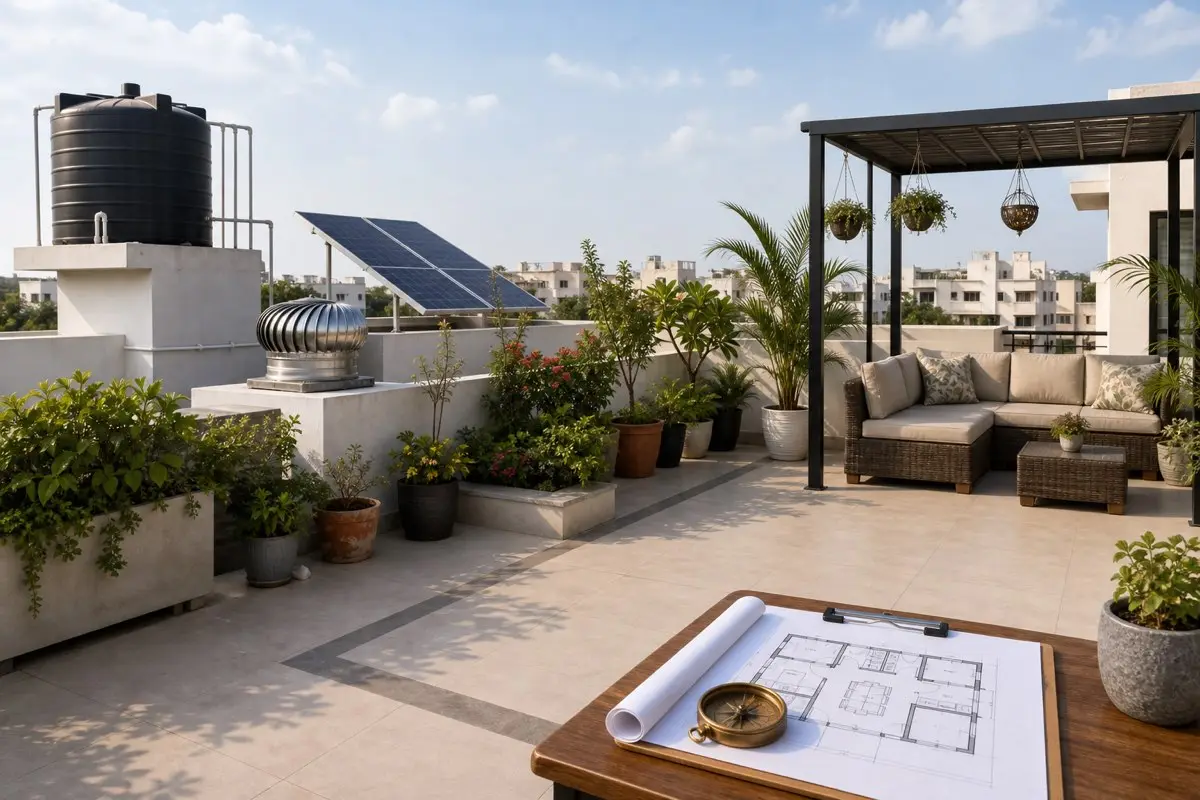
A balcony garden is a collection of plants living within the limits of an apartment: restricted floor area, neighbours below, exposure above and a door that still needs to open. Start with a few containers you can water and reach comfortably. A balcony covered in pots is not necessarily a better garden than one with room to sit and tend them.
Observe sunlight before choosing plants
Some Vastu traditions favour north-side planting or lighter greenery toward north and east. These are traditional preferences, not promises that a plant or direction brings wealth or luck. A plant's growing conditions still depend on the actual light, weather and care it receives.
Check the balcony in the morning, around midday and later in the afternoon. Note which parts receive direct sun and which stay behind an overhang or neighbouring wall. An east-facing balcony can be shaded by another tower; the compass label alone cannot tell you what to grow. Ask a local nursery for plants suited to the observed exposure and your climate, rather than buying a fixed list of supposedly auspicious plants.
Choose a position for each plant at its expected size, not only its nursery size. Leave room for leaves to spread without pressing into the sliding door. If a customary plant matters to the household, give it conditions in which it can be cared for rather than hiding it in an unsuitable directional corner.
Containers, weight and a usable floor
Before adding large planters, confirm building restrictions and permitted loading with the building manager and an appropriately qualified professional. Include the filled container and water, not just the empty pot, when describing the proposed setup. Do not assume that grouping heavy pots beside a wall makes them safe.
The RHS balcony and roof-garden guidance highlights load limits and wind exposure as constraints. Lightweight containers may help reduce the container's own weight, but they do not establish a safe total load. Avoid adding masonry beds, deep soil layers or stored water without a suitable assessment.
Leave enough space to reach the farthest pot without stepping over another one. A narrow balcony often works better with a limited number of manageable containers than several rows. Keep a chair's pulled-out position and the door track clear. Store spare compost and unused pots elsewhere if they make ordinary access difficult.
Watering without flooding the balcony below
Check the drainage arrangement of each container. A decorative outer pot can hide collected water around the growing pot; inspect it instead of assuming the surface is dry. Use suitable trays to manage drips, empty unwanted standing water and keep the balcony drain visible. Trays are not a substitute for appropriate plant drainage.
Plan how water reaches the plants. Can you carry the watering can from the tap without brushing past electrical equipment or spilling through the living room? Place the pots so the person caring for them can inspect the soil rather than watering every container automatically. Different plants and pot sizes may need different attention.
Do not sweep loose soil or leaves into the outlet. Remove debris before heavy rain and check where runoff goes. Water should not pour over the edge onto neighbours, an entrance or a public path. If drainage backs up or the balcony leaks, report the defect rather than concealing it under a garden mat.
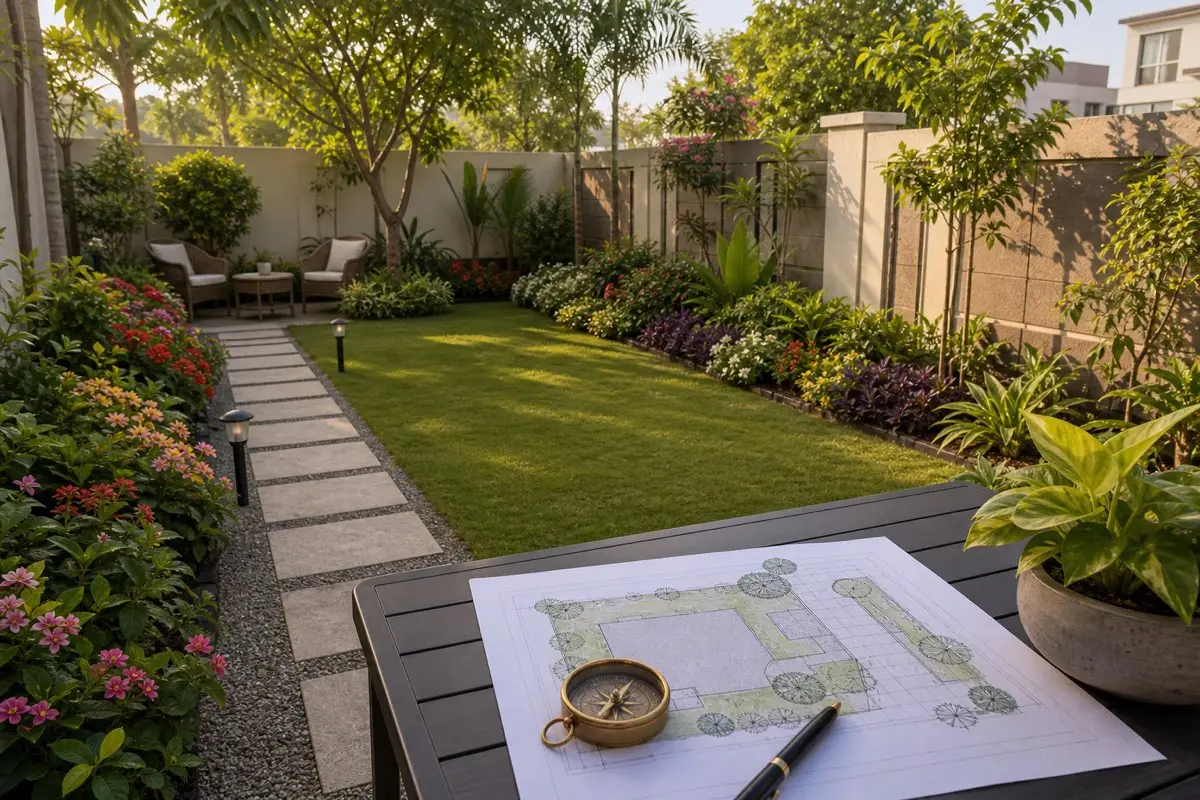
Wind, railings and privacy planting
Exposed balconies need a plan for windy weather. Keep pots away from unprotected edges and avoid loose objects that could fall. Do not perch containers on a railing or hang them outside it without an approved, suitable installation. A balcony rail is a safety barrier, not automatically a planter support.
Privacy planting should not create a climbable step beside the railing or block supervision of children. Tall screens and climbing supports also catch wind; confirm permitted fixtures with the building before installing them. Never reduce the effective protection of the railing to obtain a denser green screen.
For a rental, favour arrangements that can be removed without drilling into the floor or waterproofing. Reversible does not mean unsecured: any stand still needs to be stable and appropriate for its location. Leave shared facade elements, drains and safety features unaltered.
Illustrative example: an east-facing balcony with several pots
Consider a small balcony where morning sun reaches one end, while the other remains shaded under the slab above. Several planters line both sides, leaving no room to open a folding chair. A practical revision is to identify which plants suit each light condition, reduce spare containers and keep one uninterrupted route from the door to the drain.
Before rearranging, confirm that the proposed containers comply with building limits. Try the chair in use and lift the watering can into position. A pot that must be reached over the railing does not belong in that location. This is a planning example, not a claim that changing plant direction creates a particular outcome.

Review the garden when the season changes
Sun can reach different parts of the balcony as the season changes, and wet or windy weather can expose problems not seen on a calm day. Recheck trays, supports and drainage after storms. Before a trip, leave clear care instructions for each plant group rather than asking someone to water everything equally. Replace an unsuitable plant choice when needed instead of continually adding more pots around it.
Balcony planting questions
Yes. Overhangs and neighbouring buildings can block direct light. Observe the spot where the pot will sit and choose a plant for that exposure, not just the balcony's compass direction.
No. Their contents and retained water also contribute weight. Confirm the proposed setup with the building and seek professional loading advice when needed; a light empty container is not evidence of spare structural capacity.
Use suitable trays, inspect overflow and water where you can see what is happening. Keep the floor outlet clear and report drainage defects. Do not direct runoff over the balcony edge.
A modest arrangement within the balcony may help, provided it leaves circulation and the safety barrier effective. Avoid climbable stands beside rails and check building rules before attaching supports.
When the garden involves building work
This site is educational only. If your concern involves structure, waterproofing, electrical safety, gas lines, or major plumbing, consult qualified professionals before making changes. Many “Vastu problems” people experience in real life are actually practical building issues: dampness from leaks, poor ventilation, unsafe wiring, or blocked drainage. Fixing those basics often improves comfort immediately.