
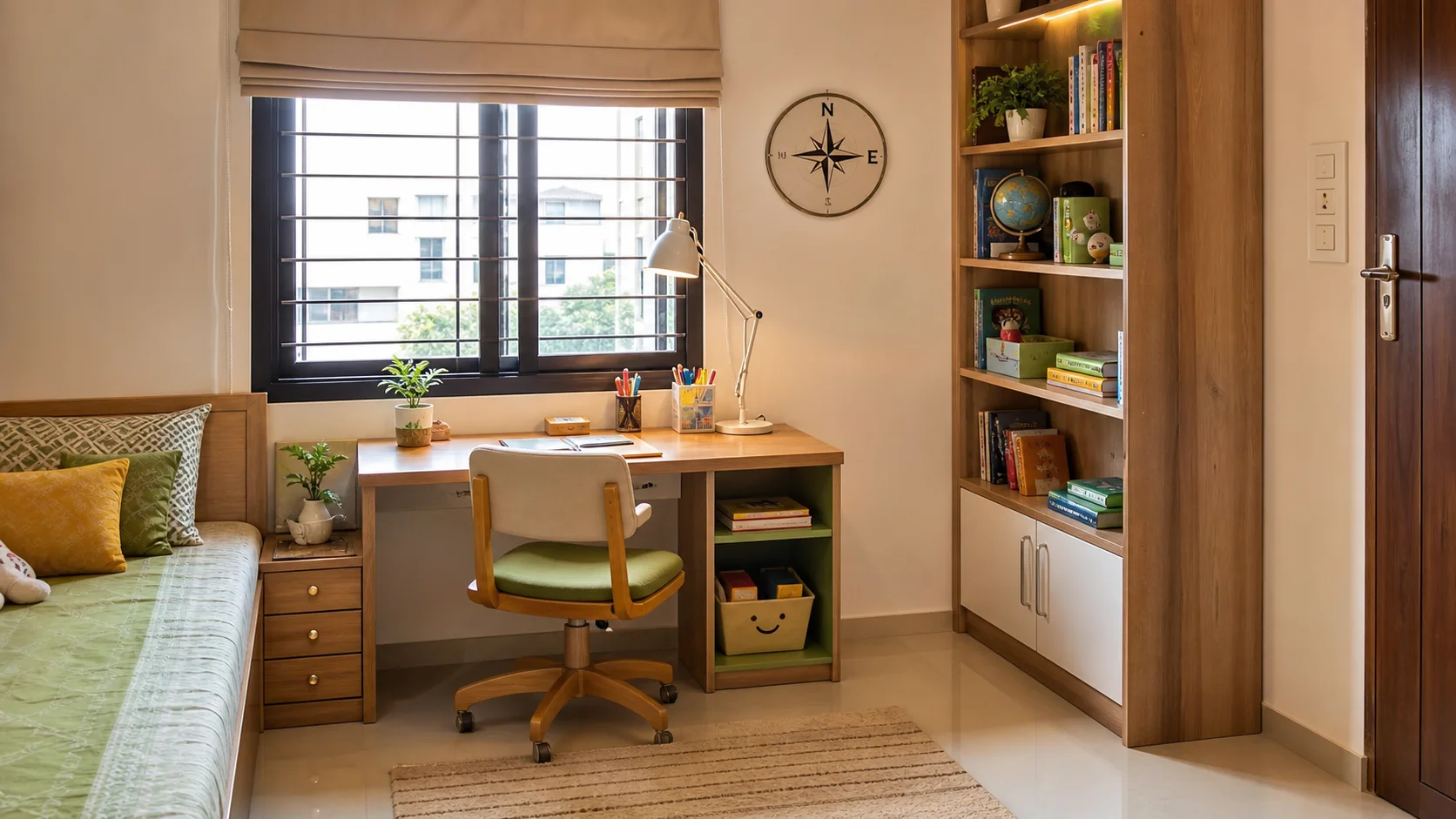
A child's room has several jobs: a place to sleep, a surface for schoolwork, storage that the child can actually reach, and space to play without stepping over furniture. Plan those jobs around the child's present age, rather than furnishing the room as a miniature adult bedroom. Leave room for a larger desk or different bed later.
Traditional direction and the usable room
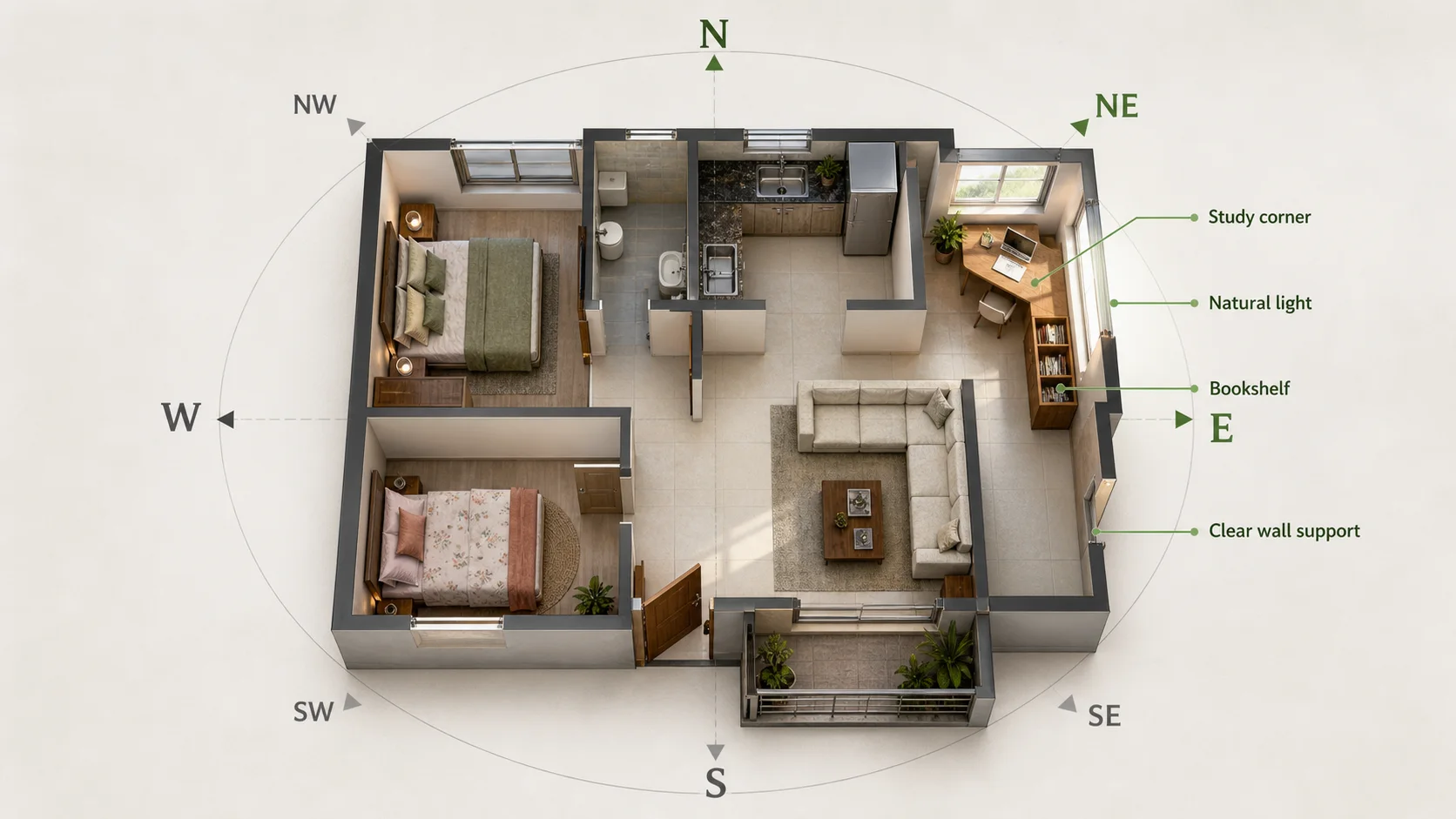
Some Vastu traditions prefer an east-side children's room. Treat that as a traditional planning preference, not a prediction of intelligence, behaviour or school results. In an existing apartment, the available bedroom may face elsewhere. Its window, door swing and furniture clearances are more useful starting points than moving the child to an unsuitable space.
Mark the bed, wardrobe and desk on a simple room sketch. Include the space occupied by an open drawer and a pulled-out chair. A desk that fits against a wall may still block the doorway when someone is sitting at it. Keep the route from the bed to the door separate from the area used for toys.
Bed placement that leaves room to grow
Use a stable bed position where bedding does not cover a heater or vent and the child can get in and out without squeezing around sharp furniture corners. Avoid using the bed as a step to reach a high cupboard. Keep it away from accessible window cords and do not arrange climbable furniture to provide easy access to a window.
Choose the bed for the child's age and follow its manufacturer's instructions. A bunk or loft bed is not simply a space-saving substitute for every child: age restrictions, guardrails, ladder access and overhead clearance matter. Before buying one, check how bedding will be changed and where the child will stand while getting down. A lower bed with separate storage may be easier to use in a compact room.
A study desk for books, screens and daylight
Put the desk where daylight can reach the work surface without making the child stare into a bright window. Try the position at the time homework is normally done. If the page looks washed out or a screen reflects the window, adjust the desk angle or use an appropriate blind. A reading lamp should illuminate the work, not shine directly into the child's eyes.
Check the chair with the child sitting on it: the work surface should be comfortably reachable, and feet should have support rather than dangle. Keep the books needed that week near the desk, with older material elsewhere. A charging point should not require a cable stretched across the walking route. Do not place charging equipment under bedding or cushions.
Toy storage and wardrobes a child can use
- Give frequently used toys a reachable home. Small labelled baskets can separate building pieces, drawing supplies and soft toys without covering every shelf with containers.
- Keep heavy items low. Do not display a favourite toy above a tall cupboard where reaching it invites climbing.
- Provide a place for the school bag that is outside the door swing. Wet shoes and sports kit should not be packed against bedding.
- Anchor dressers, bookcases and other tip-prone furniture using suitable hardware and manufacturer instructions. Check the wall and fittings with a qualified installer when unsure.
Furniture anchoring is a safety measure, not a Vastu remedy. The CPSC Anchor It guidance explains the tip-over issue. In a rental, discuss suitable fixing arrangements rather than assuming a heavy wardrobe cannot fall.
Colour, lighting and a room shared by siblings
A calm base palette can leave room for the child's preferences. Let bedding, a pinboard or a small painted area carry a favourite colour. Keep the desk background readable instead of covering it with competing patterns. Separate bedside light from the study lamp so one activity does not require lighting the entire room.
When siblings share, allocate storage by person as well as by activity. Each child needs somewhere to put unfinished work without the other having to clear it. If there is only one desk, agree how it changes hands and where each child's materials wait. Do not force matching furniture if the children need different chair sizes or have different schedules.
Leave window openings and ventilation paths accessible. A toy chest beneath the only opening window can make routine airing awkward. Revisit the layout when school needs change: a toddler's floor-play space may later need to become a reading or computer area.
Illustrative example: fitting a bed and homework desk
Consider a child's bedroom with a bed on one long wall, a wardrobe beside the door and a desk proposed under the window. On the sketch, the desk fits, but its chair would collide with an open wardrobe door. One option is a shallower desk on the adjacent wall, with daylight arriving from the side. Another is to keep the desk under the window and relocate a freestanding storage unit, provided the door route remains clear.
Test both arrangements with the chair pulled out and a school bag in its normal place. Ask the child to reach a book, sit down and leave the room. Keep whichever arrangement supports those ordinary tasks without creating a new obstruction.

Children's room questions
No. A traditional facing preference should not make the work surface difficult to see. Try side daylight, a different desk angle or glare control, and keep the chair and doorway usable.
Separate each child's books and unfinished work first. Then assess whether two work surfaces fit with chairs in use. If not, a shared desk with agreed times and individual storage may be more workable than two cramped desks.
They do not need to disappear. Give toys a storage zone away from the active homework surface, and keep enough open floor for the way the child actually plays. Review that balance as their interests change.
Measure the room with doors and drawers open, check the child's seating needs, and confirm product age limits and anchoring requirements. Avoid buying a larger bed that leaves no practical place for a desk or safe movement.
Before moving large furniture
This site is educational only. If your concern involves structure, waterproofing, electrical safety, gas lines, or major plumbing, consult qualified professionals before making changes. Many “Vastu problems” people experience in real life are actually practical building issues: dampness from leaks, poor ventilation, unsafe wiring, or blocked drainage. Fixing those basics often improves comfort immediately.