
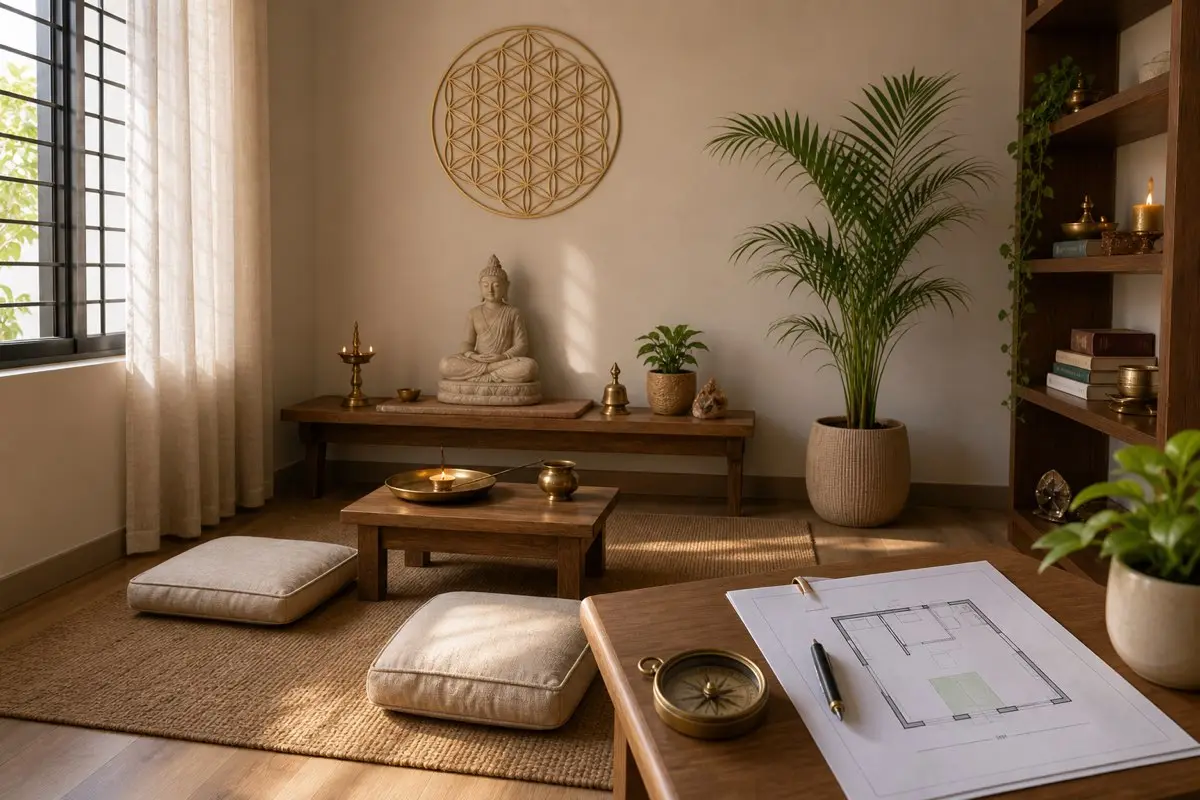
A meditation space can be a room, a chair beside a window or a mat brought out at a regular time. Its purpose is to make a chosen period of quiet reflection possible without requiring the rest of the household to stop functioning. It does not need elaborate decoration or a devotional setup unless those belong to the person's practice.
Choose a quiet location before buying anything
Some Vastu traditions favour the North-East for meditation; the compass reference can help locate it. Consider that preference alongside the home's noise and movement patterns. A North-East corner beside the television or main door may be less usable at your chosen time than another quiet part of the home.
Spend a few minutes in each possible location at the time you intend to use it. Listen for kitchen work, calls, traffic and appliances. Notice whether someone must cross the space to reach a cupboard or balcony. A place that is quiet at midday may be busy before breakfast. Choose around the actual routine rather than an empty-room photograph.
Room direction does not establish medical benefit or guarantee a spiritual outcome. This guide concerns the physical arrangement of a reflective space, not treatment for sleep difficulties or mental-health conditions.
Floor seating and chairs are both options
Allow enough space to sit down, change position and stand up without leaning on unstable furniture. A cushion or mat should be easy to put away and should not curl into the walking route. If using floor seating, check how the position feels on the actual flooring, including its temperature and firmness.
A stable chair may be more suitable than floor seating for someone who prefers it. Choose one that allows a supported sitting position and gives the feet a comfortable resting place. There is no need to force a posture to match a room photograph. Keep the area beside the chair available for getting up rather than filling it with decorative objects.
If more than one person uses the corner, store different cushions or supports where they are easy to select. Avoid making one person's setup the compulsory arrangement for everyone.
Light, glare and temperature at sitting height
Look at the room from the seat, not just while standing at the door. A bare bulb or bright window can be directly in the seated line of sight. Try a different chair angle, a suitable shade or diffused daylight before adding more lamps. Soft light should still leave enough visibility to get up and move safely.
Check airflow during the intended session. A fan aimed at the face or an AC draught may be distracting even in an otherwise quiet room. Adjust normal controls where possible and leave vents unobstructed. Avoid placing a mat against a damp wall simply because the corner seems secluded.
Keep colours and objects as simple as you personally find useful. Neutral colours are optional: a familiar room with a clear resting view may serve better than repainting it. A blank wall is not a requirement, nor is a particular ornament.
Reduce interruptions without isolating the corner
Agree a realistic quiet time with other household members. If the only available space is the living room, a short period before it becomes busy may be easier to maintain than a permanent screen across the room. Put the phone where it can be silenced or used for a timer without requiring a charging cable across the floor.
Ordinary curtains or a suitable rug may soften some room reflections, but they do not soundproof a wall or remove outside noise. Do not cover ventilation openings in pursuit of silence. For substantial acoustic changes, seek appropriate advice; a small amount of unavoidable household sound need not trigger a renovation.
A folding screen can define the sitting area where space permits, but check its stability and the route around it. It should not hide someone seated behind a frequently opened door or block an exit. A chair facing away from household movement may be enough to create a usable boundary.
Keep practice items ready, not permanently spread out
- Choose one drawer, shelf or basket for the mat, cushion, timer and any reading material actually used.
- Let a damp mat dry before rolling it up. Keep washable covers and the floor underneath accessible for cleaning.
- Store optional objects separately so the sitting area can remain clear.
- Make the setup reversible in a shared room: moving one chair or unrolling one mat is easier than clearing an entire display.
Illustrative example: a meditation corner in a shared living room
Imagine a small apartment where the North-East corner contains the household's main storage cabinet. Sitting directly in front of it would interrupt access during the morning rush. A resident could instead use a chair beside another wall after breakfast, with a cushion stored in a nearby drawer. The household agrees when the television will be off, while the balcony route stays available.
Try that arrangement on an ordinary day. If the chair receives strong glare, turn it or adjust the window treatment; if someone repeatedly needs the adjacent cupboard, change the timing or seat position.

Questions about a reflective space
Yes. Arrange a stable chair with comfortable support and enough room to stand up. The physical setup should suit the person using it; copying a floor-seated photograph is not the goal.
Use the location that works with the household's routine. North-East is a traditional preference, while repeated interruptions and blocked cupboard access are immediate layout constraints.
No. A stored mat or movable chair can suit a multipurpose room. Keep the required items together so setting up does not become a furniture-moving exercise.
When the quiet-space plan involves building work
This site is educational only. If your concern involves structure, waterproofing, electrical safety, gas lines, or major plumbing, consult qualified professionals before making changes. Many “Vastu problems” people experience in real life are actually practical building issues: dampness from leaks, poor ventilation, unsafe wiring, or blocked drainage. Fixing those basics often improves comfort immediately.