
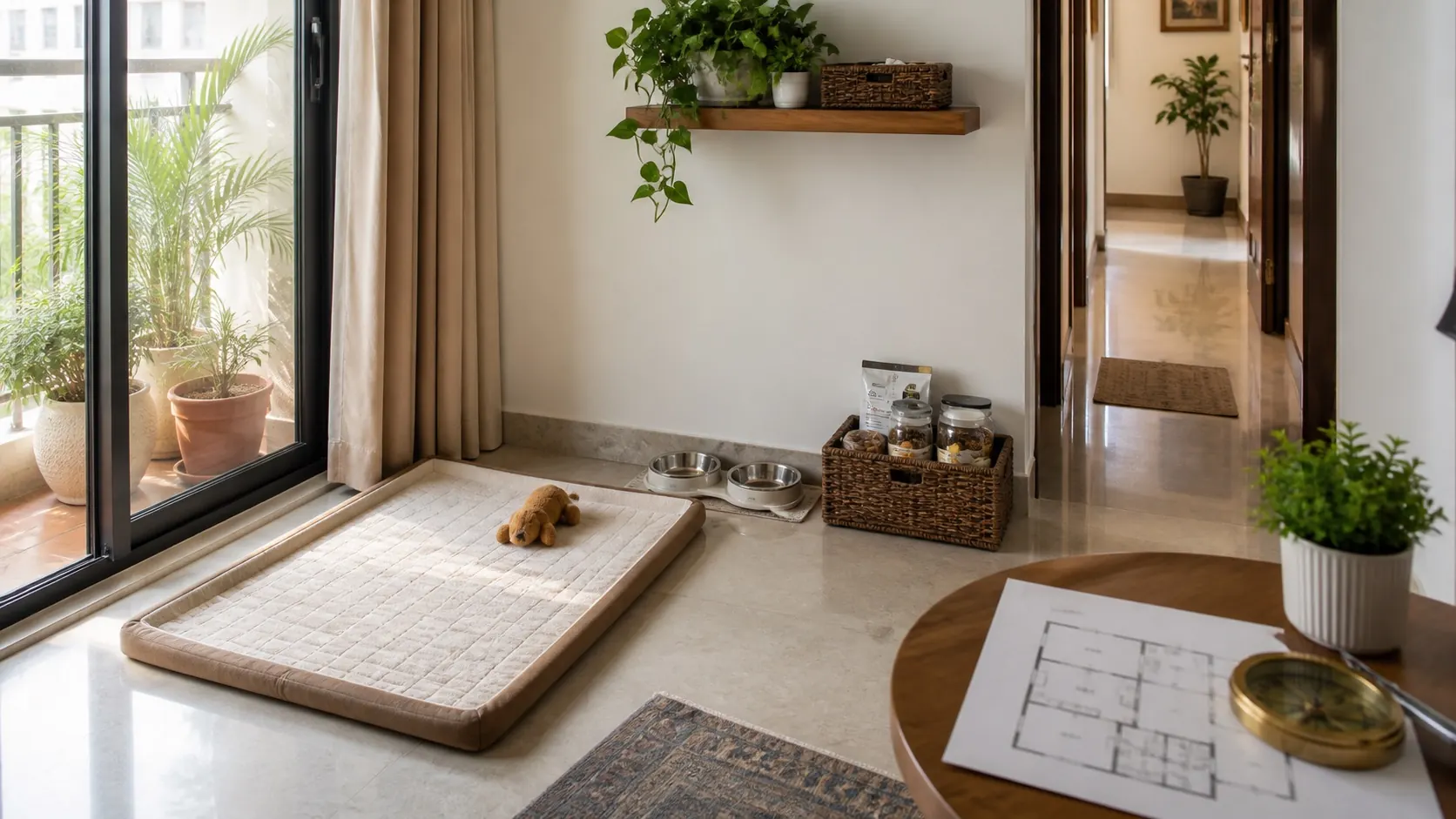
A pet area should be planned around the animal that lives there, not around a generic room diagram. A dog's sleeping mat, a cat's litter tray and storage for food have different requirements. They need not occupy one tightly packed corner. Think of several small, usable places connected by safe access through the home.
Pet needs before a directional preference
Some Vastu guidance suggests North-West for a pet area. Treat this as a traditional household preference, not an animal-care rule. It does not determine a pet's health or behaviour. Species, size, age, mobility and individual needs should guide the setup, with veterinary advice where those needs are uncertain.
Observe where the pet already rests and how it moves through the apartment. A corner beside the entry may be repeatedly disturbed by deliveries; a narrow passage may leave a resting animal directly underfoot. Do not confine an animal to a hot balcony or noisy utility area merely because it matches a compass zone.
A resting place with room to settle and leave
Provide a resting surface appropriate for the pet, with enough space to lie comfortably and change position. Place it where people will not continually step across it. The animal should be able to approach and leave without squeezing past a door, unstable object or another pet's feeding station.
Check the location at different times of day. A patch of morning sun can become a much hotter spot later, while a fan or AC may blow directly at bedding. Make a comfortable alternative available and do not use a photograph of a sunny pet bed as evidence that the location is suitable all day.
Washable covers and an accessible floor beneath the bedding make routine cleaning easier. Let washed bedding dry before putting it back. If the animal avoids the space or develops a new problem, do not interpret that as a directional defect; discuss persistent changes with a veterinarian or appropriate qualified professional.
Feeding and water without creating an obstacle
Choose a feeding location where bowls will not be kicked by someone opening a cupboard or passing to the kitchen. Use bowls and a feeding arrangement suitable for the animal; special feeding needs belong with the veterinarian, not a Vastu prescription.
Keep fresh water accessible and check for spills. A washable mat can help manage the area if it lies flat and is appropriate for the pet, but clean underneath it as well. Do not position water beside exposed electrical connections or where a spill would soak the resting bed.
In homes with more than one pet, observe whether one animal blocks another's access to food, water or a resting place. Separate resources where needed and seek qualified advice for persistent difficulties rather than attempting to solve them with a new compass orientation.
Toileting areas are a separate planning decision
For cats, place litter boxes where they are accessible and reasonably quiet, not behind a door that is regularly closed or beside startling machinery. Keep them separate from food and water, and plan access for scooping and cleaning. The ASPCA's litter-box guidance discusses location and access; changes in toileting can also need veterinary assessment.
For a dog using an agreed indoor toilet arrangement, keep that surface distinct from the bed and bowls. Follow advice appropriate to the dog's circumstances and provide the required cleaning routine. A utility-balcony photograph is a reference for washable surfaces, not a recommendation to keep all pets or their toilet facilities outdoors.
Remove waste promptly and use cleaning products suitable for the species and surface, following their directions. Strong fragrance is not a substitute for cleaning or ventilation. Persistent odour should lead to a check of the source and care routine rather than adding incense around the animal.
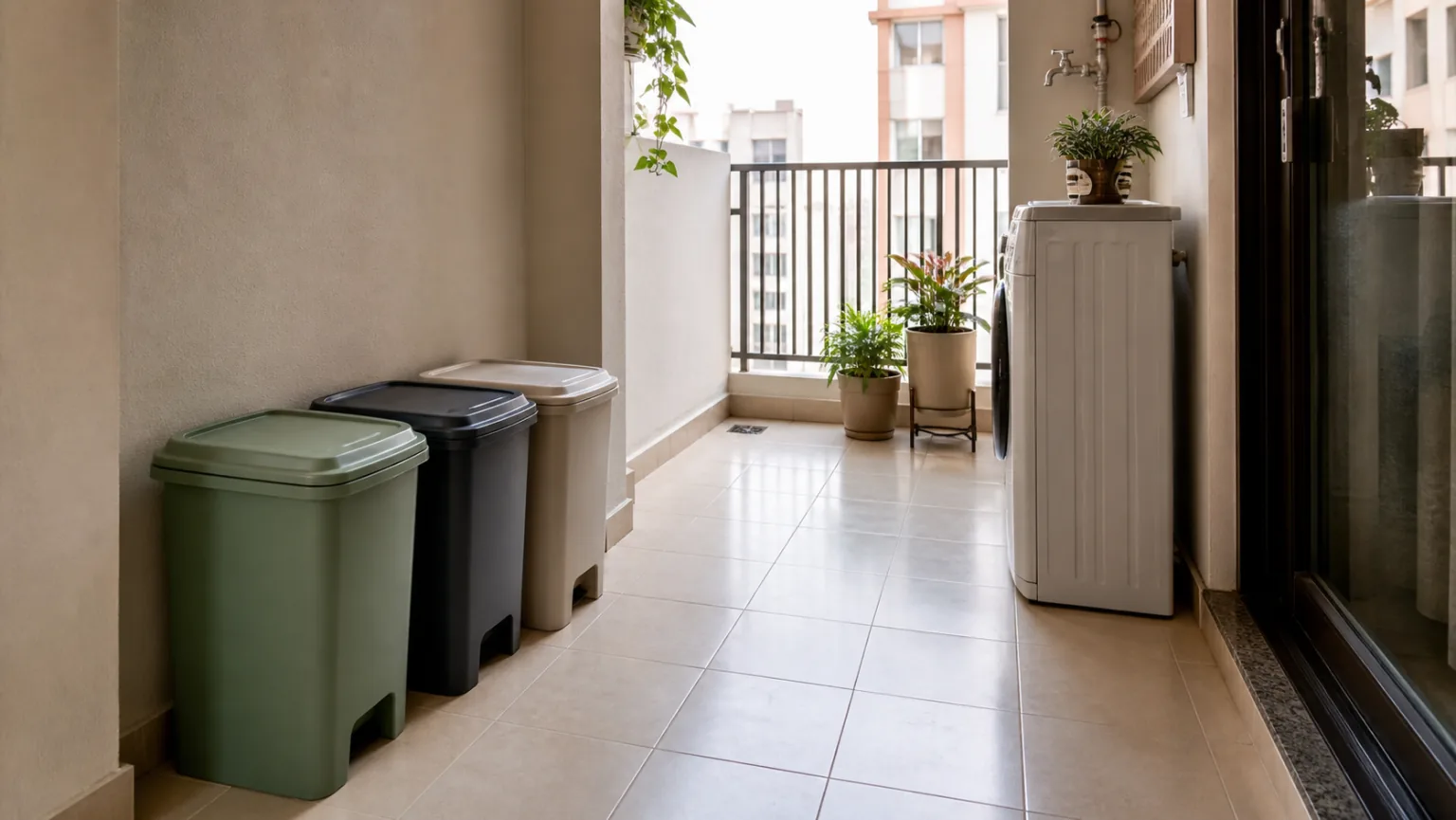
Supply storage and household hazards
- Keep food in suitable closed storage, following its packaging instructions, rather than leaving an open bag beside cleaning chemicals.
- Give leads, grooming items and waste supplies an accessible place for the people who use them, without trailing straps across the floor.
- Secure medicines, cleaning agents and other hazardous products where the pet cannot reach them. Do not store them with toys or treats.
- Check loose cables, small objects and reachable plants. Confirm plant suitability for the particular species with reliable pet-safety information or veterinary advice.
Keep a pet's route through the room in mind when placing furniture. A new cabinet may block access to water even if a person can step around it. For a pet with mobility limitations, get advice about suitable access rather than improvising steep ramps or requiring jumps.
Balconies and windows are not automatic pet enclosures
Do not assume a cat will avoid a dangerous drop or that a small dog cannot fit through a railing gap. Restrict access to unsafe openings and obtain a suitable, approved containment solution where balcony use is intended. Keep furniture from providing access over a barrier, and do not leave a pet on an exposed balcony as its default living space.
The ASPCA's high-rise safety guidance explains the danger of falls from open windows and the need for secure screens. Check the actual installation; a loose insect screen should not be assumed to contain an animal. Veterinary help is appropriate after a fall or injury, not a change to the room's direction.
Illustrative example: a dog's space in a compact apartment
Consider an apartment where a dog's bed is beside the front door, bowls sit in the kitchen passage and food bags occupy the utility floor. Instead of moving everything into one corner, identify three locations: an undisturbed indoor resting spot, a feeding surface outside the main walking line and a secure cupboard for supplies.
Check that the dog can reach water when internal doors are closed and that cleaning access is practical. Keep the balcony out of the arrangement if its barrier or exposure is unsuitable. This example is about access and household routines; any special care or persistent behavioural concern needs appropriate professional advice.

Questions about living space for pets
No. They serve different purposes. Arrange them around the animal's needs and access, keeping toileting separate from feeding and leaving a usable resting space. Ask your veterinarian about any species-specific requirements.
Do not choose an exposed balcony merely to save indoor space. Consider heat, weather, escape and fall risks, and provide suitable indoor accommodation. Any intended balcony access needs appropriate protection and supervision for that animal.
Check noise, temperature, access and the bedding itself rather than forcing the location. A traditional preference is not a reason to ignore the animal's needs. Seek veterinary advice if avoidance is new or accompanied by concerning changes.
Review waste removal, washable bedding, spills and ventilation. Use appropriate cleaning products rather than masking smells. Persistent or unusual odour associated with the animal warrants veterinary advice.
Building changes around a pet's space
This site is educational only. If your concern involves structure, waterproofing, electrical safety, gas lines, or major plumbing, consult qualified professionals before making changes. Many “Vastu problems” people experience in real life are actually practical building issues: dampness from leaks, poor ventilation, unsafe wiring, or blocked drainage. Fixing those basics often improves comfort immediately.