
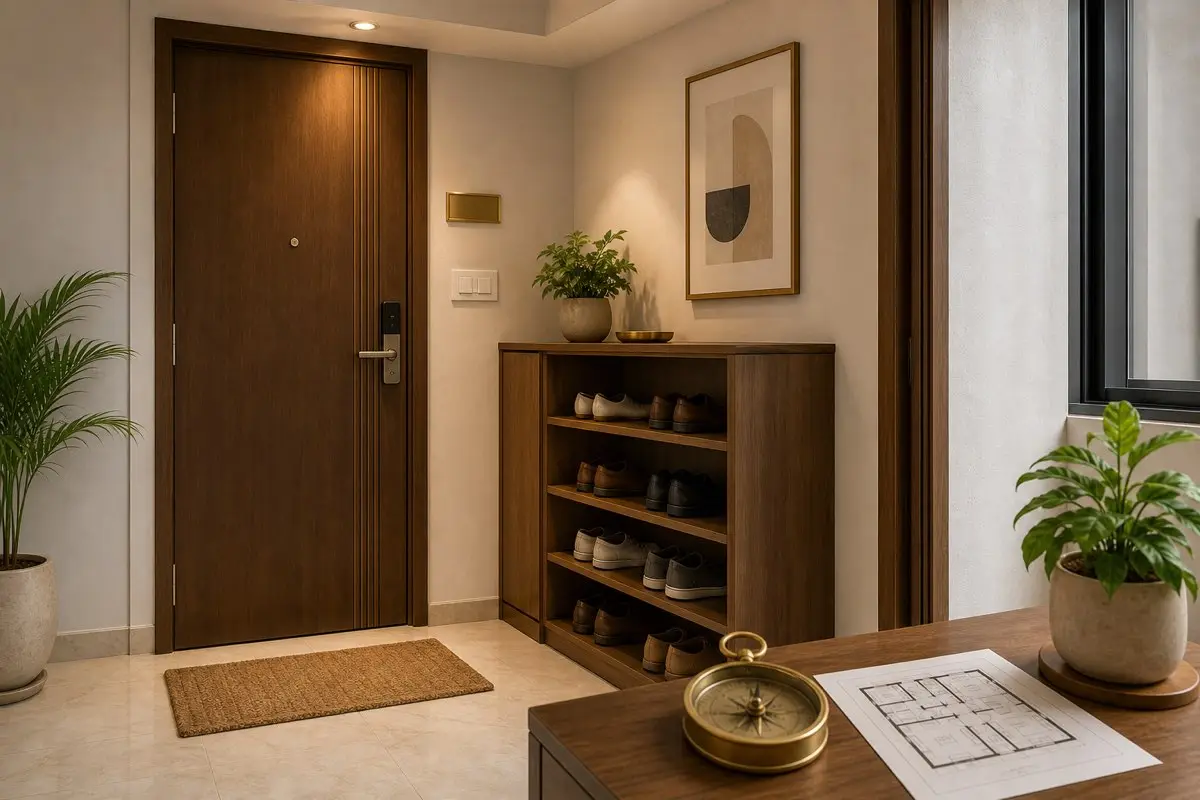
A shoe rack should hold the footwear the household uses without becoming another obstacle at the door. Its location, depth and cleaning routine matter as much as its capacity. Start by separating everyday pairs from occasional footwear so the entrance does not have to store the entire household collection.
Traditional preferences and the available storage wall
Some Vastu traditions favour West for shoe storage, with South-West or North-West also considered. Treat these as placement preferences rather than a reason to block the main door or fill an unsuitable corner. A modest rack in a workable position is more useful than an oversized cabinet forced into a preferred zone.
Where the household follows a custom of separating footwear from prayer or food areas, plan that separation respectfully. It does not require treating a direction as a source of bad luck. Keep dirty soles and wet footwear away from food-storage surfaces as an ordinary housekeeping measure.
Check the rack while someone is using it
Measure the proposed unit with its doors or tilt-out compartments open. Include the space needed for someone to bend down and retrieve shoes. A shallow closed cabinet may project much farther into the passage when its front opens.
Try the location with the main door open and a person entering carrying a bag. Keep both the door swing and the onward walking route clear. If a seat is needed for putting on shoes, account for the person's legs and the space used while standing up rather than measuring the stool alone.
Choose a unit that holds the footwear actually worn, including larger shoes or boots where relevant. A cabinet that cannot take those pairs will leave them on the floor beside it. A smaller daily-use allocation with other pairs stored elsewhere may work better than filling the entrance wall.
Open rack or closed cabinet?
An open rack makes pairs easy to find and inspect but leaves them visible and exposed to household dust. A closed cabinet can contain visual clutter, yet it still needs suitable ventilation and cleaning access. Closing the door does not remove moisture or odour.
Look for shelves that can be reached and cleaned without dismantling the whole unit. Removable trays can help with dirt if they are cleaned rather than left to collect it. Keep the cabinet's intended ventilation openings clear and avoid packing every gap tightly.
For rented homes, use an arrangement compatible with the property's rules and the furniture's installation requirements. A freestanding cabinet may still need anchoring; do not skip required fixings merely to avoid marks. Follow the manufacturer's instructions and agree suitable installation with the landlord.
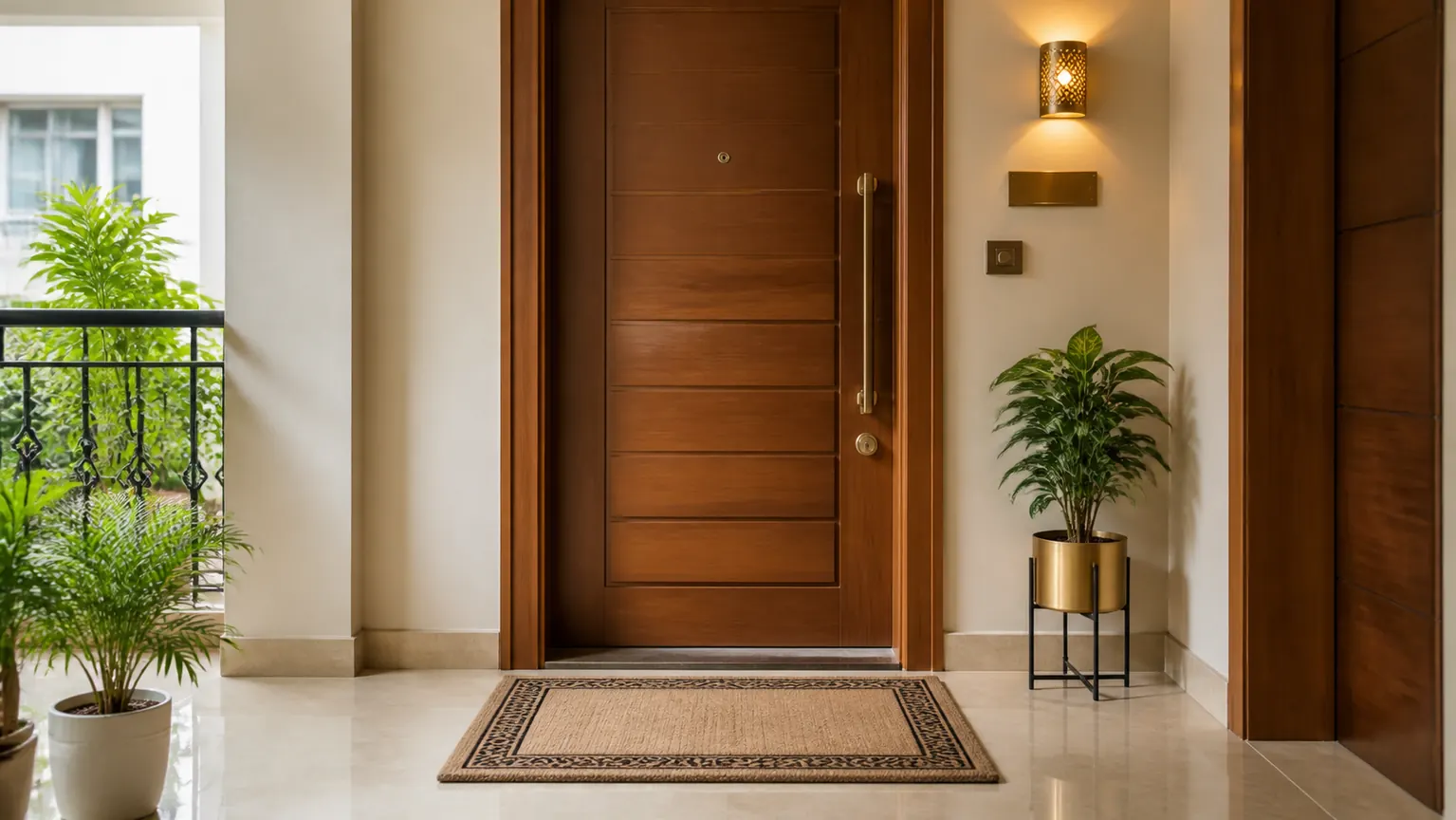
Give wet footwear a separate temporary place
After rain, do not put dripping shoes straight into crowded closed storage. Use a suitable temporary drying place with a washable surface, away from the walking route, and follow the footwear's care instructions. Avoid placing shoes against a heater or using an improvised electrical drying arrangement.
A drip tray should catch water without becoming a permanent puddle. Empty and clean it, and check the floor beneath. Once footwear is dry, return it to its assigned shelf so the temporary area remains available for the next wet pair.
If a rack develops persistent odour, inspect damp shoes, dirty liners, trays and the surrounding floor. Do not simply add fragrance and shut the cabinet. A wall leak or wet entrance surface needs attention independently of footwear storage.
Assign storage by routine, not by a daily pile
Put frequently used pairs within comfortable reach for their users. Keep occasional footwear in a separate suitable storage location, with enough information to find it later. Children should not need to climb a tall cabinet to retrieve their everyday shoes.
Allow a little planned space for visitors rather than expecting them to guess where a pair belongs. Avoid expanding that temporary space into the common apartment corridor. Shared-area rules and access requirements still apply even when the rack is portable.
During cleaning, move the appropriate removable parts and inspect behind the unit where accessible. A rack should not make the threshold permanently difficult to sweep. Review capacity when footwear accumulates instead of stacking loose pairs on top until they fall behind it.
Illustrative example: storage beside a narrow apartment door
Imagine an apartment where a deep shoe cabinet fits beside the door when closed, but its open front blocks the passage. Compare a shallower suitable rack or a smaller daily-use unit in another permitted position. Keep occasional footwear outside the entrance collection.
Test the alternative with the largest everyday pair, the door moving and someone putting shoes on. Allocate a separate washable spot for wet footwear if one can fit without obstruction. This solves a storage problem without redesigning the entrance or pretending the rack's direction changes household outcomes.

Shoe-storage questions
No. Compare ventilation, cleaning access, available depth and the footwear it must hold. A closed unit hides the contents but still needs dry shoes and regular cleaning.
Keep that door movement clear. Choose another workable location or reduce the entrance collection rather than forcing a cabinet into the swing area for a traditional preference.
Use an appropriate temporary drying area with a washable surface outside circulation. Manage collected water and follow the footwear's care instructions before returning dry pairs to the cabinet.
Do not assume that is permitted. Check building rules and preserve shared access and emergency routes. A smaller indoor daily-use rack may be necessary.
When storage involves fixed joinery
This site is educational only. If your concern involves structure, waterproofing, electrical safety, gas lines, or major plumbing, consult qualified professionals before making changes. Many “Vastu problems” people experience in real life are actually practical building issues: dampness from leaks, poor ventilation, unsafe wiring, or blocked drainage. Fixing those basics often improves comfort immediately.