
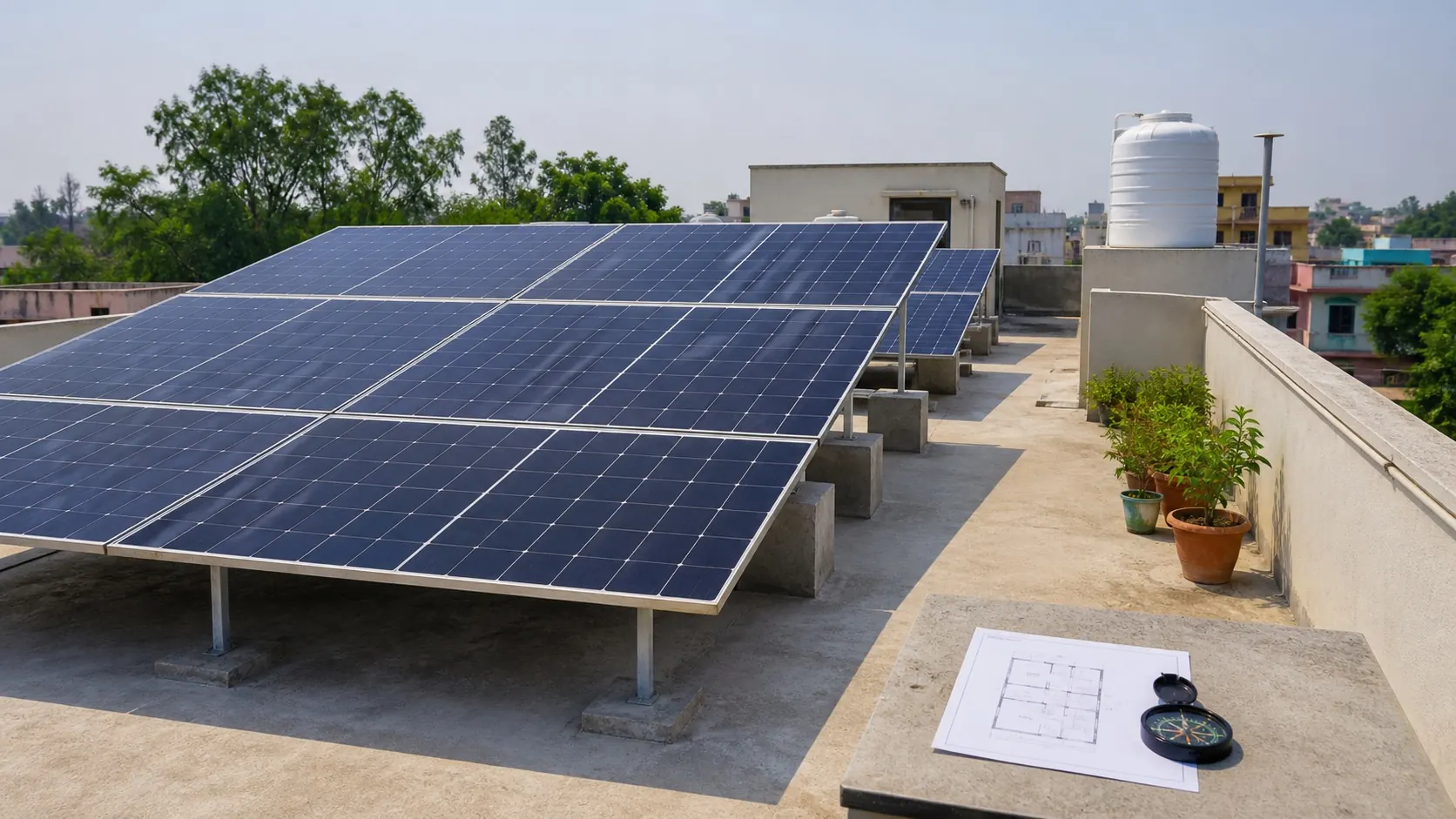
Residential solar planning begins with the roof, the available sunlight and the system's intended use. Panels, supports, wiring and associated equipment form an installation, not a set of movable rooftop ornaments. A useful Vastu discussion should work within a competent solar design rather than prescribe changes to it.
South-side preference is not an output guarantee
Some traditional Vastu layouts favour southern zones for this kind of rooftop installation. Treat that as a secondary preference, not a universal rule for panel orientation. The direction a panel faces, its tilt and where it sits on the roof are related but different questions.
Actual solar performance depends on the site's sunlight, shading, location, equipment and design. Ask the solar professional to explain the proposed arrangement and its assumptions. A preferred compass direction cannot guarantee more electricity or make an unsuitable roof suitable.
The U.S. Department of Energy's homeowner solar guide describes the value of professional roof and solar assessment. Its general planning principles are useful, but local approvals, utility requirements and the specific building still need to be checked.
Understand shade across the useful roof area
Point out nearby buildings, rooftop tanks, parapets and trees during the site visit. A roof that looks sunny at one moment can have different shading later or in another season. Request a shading assessment instead of selecting the clearest-looking spot from a single photograph.
Discuss foreseeable changes such as a proposed canopy, a neighbouring extension or new rooftop equipment. Do not cut a tree or move a water tank without the relevant permissions and professional review simply to clear an imagined solar zone.
If comparing installer proposals, ask whether the estimated output uses the same site and shading assumptions. A larger number of panels is not by itself a complete explanation of expected performance. Keep the discussion about the assessed installation rather than a promise attached to a Vastu direction.
Roof condition and maintenance access belong in the layout
Tell the installer about known leaks, previous waterproofing repairs and planned roof work. Have roof suitability assessed before installation; do not assume mounting panels will conceal or solve an existing defect. Agree how future repairs to the roof can be managed around the equipment.
Retain access from the roof entrance to drains, water services and other equipment. Show the installer how those systems are maintained so the proposed array does not obstruct the route. Do not create a plan that requires someone to step across panels to reach a tank.
A completed installation should not become a support for clotheslines, storage boards or climbing plants. Keep alterations to mounting, cable routing and access arrangements with the responsible professionals. Even a small addition can create a conflict with servicing or a roof warranty.
Inverters and other equipment need suitable conditions
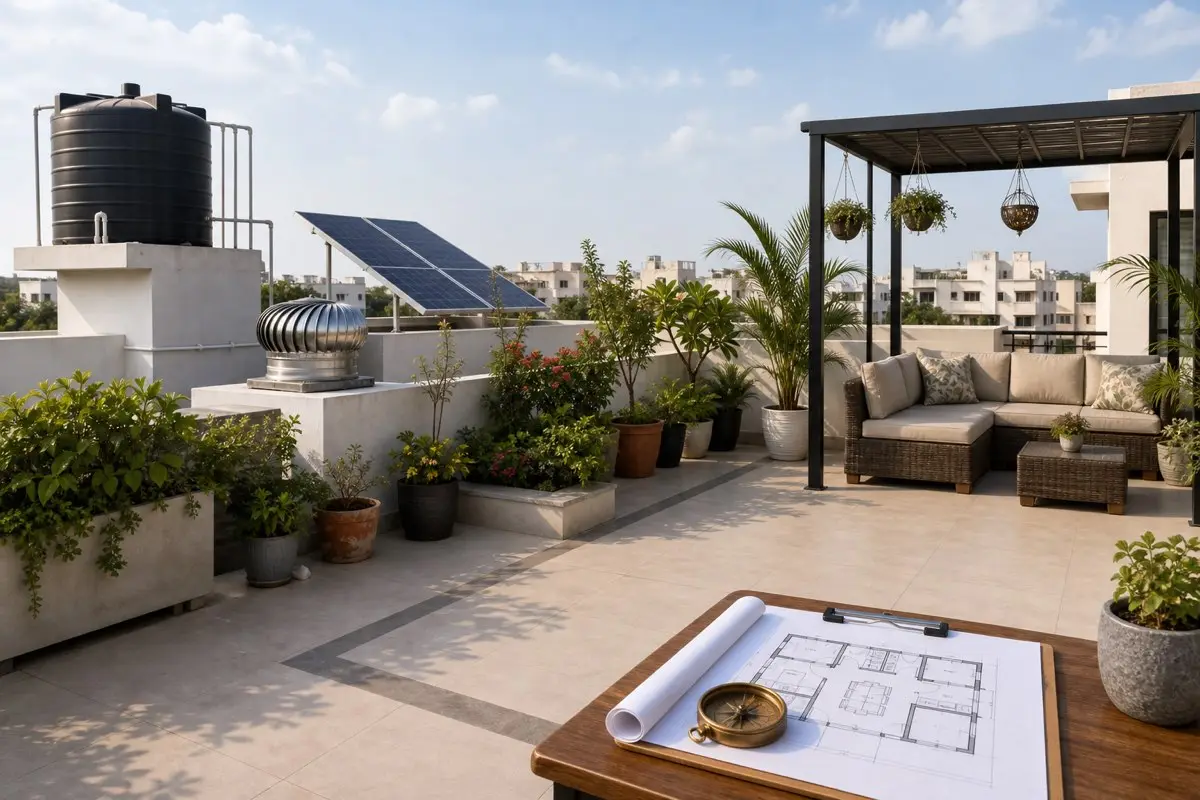
Identify which equipment is included in the proposal and where it will be located. Not every solar installation includes a battery. Ask about the manufacturer's environmental, ventilation and access requirements for the actual products, rather than assigning all electrical equipment to a decorative cabinet.
Keep service clearances and controls accessible. Do not build a cupboard around an inverter or place household storage in its working area without approval from the installer. Equipment should not be moved into a preferred Vastu corner at the expense of its installation requirements.
Wiring, electrical protection and connections need qualified installation under applicable requirements. Do not unplug, splice or reroute solar cables yourself. For damage or a fault indication, contact the installer and follow the supplied safety instructions instead of opening equipment to investigate.
Apartment roofs and shared decisions
An apartment's shared roof may serve every resident through tanks, access routes and existing systems. Clarify permission, ownership of the installation, electricity allocation and maintenance responsibility before purchasing panels. The right to use a roof is not established by living directly below it.
Ask management how maintenance staff and contractors will gain access and where project records will be held. A clear responsibility arrangement matters after installation as much as the initial layout. Coordinate future rooftop works with the solar provider rather than letting separate contractors alter each other's installations.
Illustrative example: shade and a blocked service route
Consider a roof where an existing water tank shades part of the proposed panel area and a larger array would narrow the route to a drain. Rather than moving the tank to satisfy a southern-zone preference, ask the designer to assess the shade and compare arrangements that retain service access.
The suitable proposal may use a different arrangement or a smaller usable area. Request the revised performance assumptions and roof-access plan before deciding. This example does not predict a particular energy gain; it shows why output and maintenance should be assessed together.

Existing systems: review evidence before moving anything
If production seems different from expectations, gather monitoring information and contact the installer. Weather, new shade, equipment condition or other system-specific factors may need investigation. Do not rotate panels or add a reflective object as a Vastu correction. Keep the handover documents, service contact and approved layout available for future work.
Residential solar questions
No. Facing direction and tilt are design decisions based on the actual site and system. Ask the solar professional to explain the performance assessment rather than applying one angle to every roof.
Only an arrangement approved for the equipment's requirements should be used. Do not obstruct ventilation, access or service clearances. Discuss any enclosure with the installer before it is built.
Permissions, roof condition, service paths, equipment ownership, electricity allocation and ongoing maintenance responsibilities. These need agreement before the roof is occupied by new equipment.
Not for a symbolic preference alone. Review performance and any actual defects with the installer. Relocation may affect mounting, wiring, waterproofing and approvals and is not a household rearrangement.
Roof and electrical changes
This site is educational only. If your concern involves structure, waterproofing, electrical safety, gas lines, or major plumbing, consult qualified professionals before making changes. Many “Vastu problems” people experience in real life are actually practical building issues: dampness from leaks, poor ventilation, unsafe wiring, or blocked drainage. Fixing those basics often improves comfort immediately.