
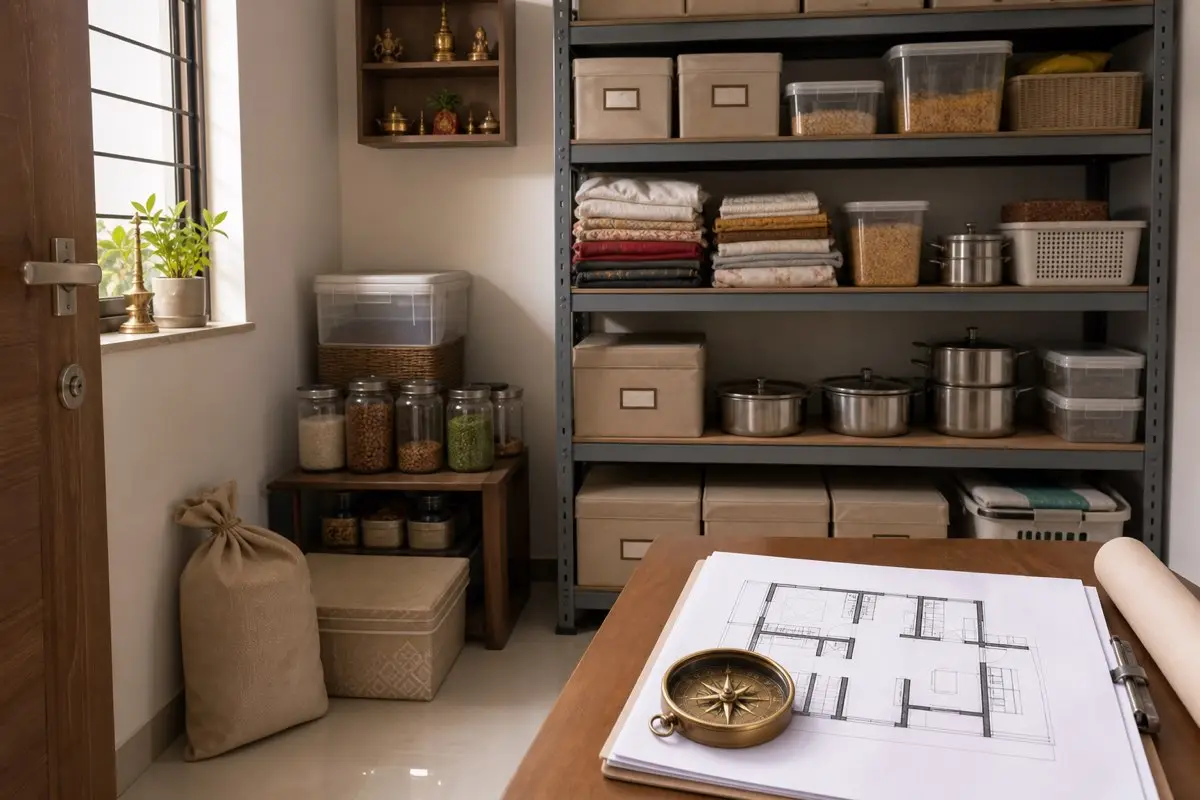
A household store room works when an item can be found, removed and returned without unpacking everything around it. The task is not simply to hide belongings behind a door. Plan shelf access, suitable supports and an understandable inventory around the things the household actually keeps.
Traditional storage zones and practical capacity
Some Vastu traditions prefer South-West for storage, with West and South also used as alternatives. These are traditional preferences, not permission to concentrate unlimited weight on one side of a building. Shelf ratings, wall fixings and the building's suitability remain practical constraints.
List the main categories before buying shelving: household supplies, spare bedding, luggage, seasonal decorations or pantry items. Decide which belong together and which require separation. A store room that combines unrelated materials without a plan is difficult to inspect even when every box has a lid.
Choose shelving for the actual load and access
Follow the shelving manufacturer's loading and anchoring instructions. Put heavier items on appropriate lower levels rather than lifting them overhead, and avoid balancing a large box across narrow supports. Do not assume a wall-mounted shelf can take a load simply because the brackets look substantial.
The CPSC Anchor It guidance highlights the importance of securing tip-prone furniture. Use fixings suitable for the unit and wall, with competent installation when needed. Never climb the shelves to reach the top.
Leave a usable aisle with the room door open and containers being handled. If retrieving a box requires leaning over unstable stacks, the arrangement needs changing. Use a suitable access aid where appropriate, not a chair balanced between shelves.
Separate frequent retrieval from long-term storage
Keep items used each week where they can be reached without moving seasonal belongings. Higher or less convenient areas may suit lighter, infrequently used items if retrieval remains safe. Avoid putting a rarely opened heavy trunk on top simply to keep the floor looking empty.
Label containers by contents in language the household understands. A brief list on the inside of the door or a simple shelf map can identify where seldom-used items live. Labels should face the aisle rather than the wall.
Group components that will be used together, such as a decoration and its fittings, without filling one container so heavily that nobody can lift it comfortably. A useful inventory can be short: enough to locate an item and prevent duplicate purchases, not a record that takes longer to maintain than the storage itself.
Moisture, ventilation and cleaning access
Store belongings dry and use containers appropriate to their materials. A sealed box can trap moisture if damp textiles are packed inside. Inspect the room for leaks or condensation before filling an affected corner, and do not hide a recurring wall problem behind a shelving unit.
Keep intended ventilation openings clear. Choose a layout that allows the floor and accessible areas behind storage to be inspected and cleaned. Stacking loose cardboard against every surface makes spills and pest signs harder to notice.
Look for damaged packaging, crumbs or other signs that require attention during ordinary cleaning. Address the source and seek suitable pest-control advice if needed rather than placing unlabelled chemicals among belongings. This is a housekeeping plan, not a pesticide-treatment guide.
Food, cleaning supplies and mixed-use rooms
If part of the room stores food, keep it in appropriate packaging or containers and follow the product's storage instructions. Make dates visible and place items so older stock can be used before newer purchases where appropriate. Do not let bulk quantities conceal damaged or forgotten packs.
Keep cleaning chemicals and other hazardous products separate from food, in their labelled containers and away from unauthorized access. A single unmarked box for every household liquid creates avoidable confusion.
A utility/store combination may also contain meters, pumps or other equipment. Preserve the access and clearances required for those installations. Do not treat every gap beside an appliance as shelf space. Check which services must remain reachable before deciding the room's storage capacity.
Small-home alternatives to a dedicated store room
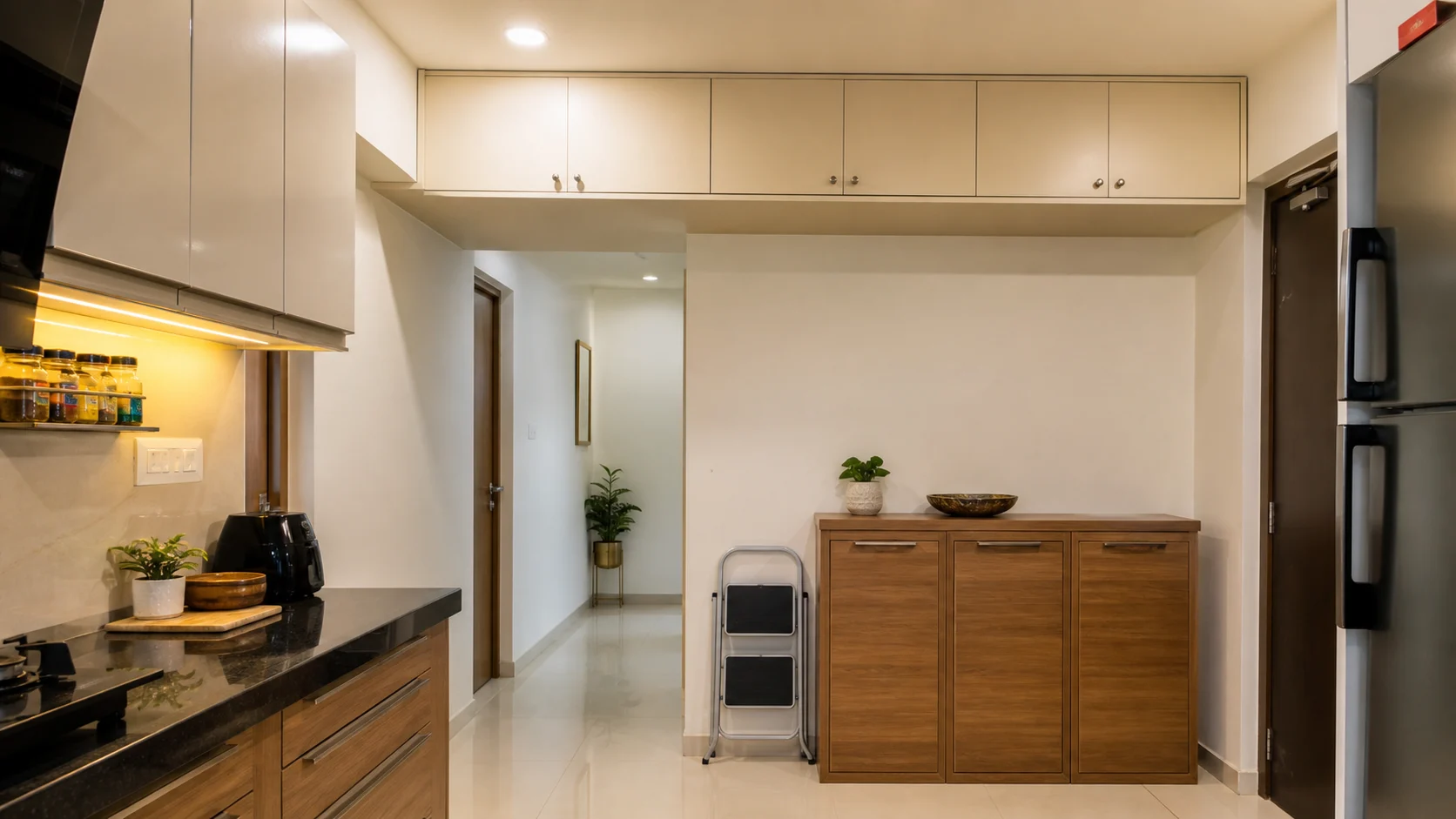
A full room is not essential. One suitable cabinet for household supplies and a separate location for luggage can be easier to use than an overfilled spare room. Decide which items need protection from moisture, heat or contamination before choosing their locations.
Keep the same category-and-access logic in a cupboard: daily supplies near the front, labelled occasional items behind or above where safely reachable, and no unstable pile held in place by the door. Reassess what is kept when access stops working rather than adding another stack.
Illustrative example: seasonal boxes behind daily supplies
Consider a compact store room containing cleaning supplies, spare bedding and festival decorations. The household uses the cleaning supplies frequently but must move large seasonal boxes to reach them. A revised plan can place the daily category on accessible shelves and the lighter seasonal containers in less frequently accessed positions.
Label the seasonal boxes, keep chemicals separate from textiles and any pantry stock, and leave room to lift a container out without blocking the doorway. Check shelving suitability before loading it. The example concerns retrieval and separation, not a claim that storage in a preferred zone changes wealth or luck.

Household store-room questions
No. Use suitable supports and follow rated loads and installation requirements. A traditional direction preference cannot establish shelf or building capacity.
Separate categories by how often they are retrieved. Keep daily items directly accessible, label occasional containers and leave enough aisle space to remove them when needed.
Only with suitable separation and storage according to product instructions. Keep hazardous products labelled, secured and away from food; do not combine unrelated liquids in unmarked containers.
No. Investigate the moisture source and store items dry. Containers help organize and protect suitable contents but do not repair leaks or make a persistently damp room suitable.
Before adding heavy or fixed storage
This site is educational only. If your concern involves structure, waterproofing, electrical safety, gas lines, or major plumbing, consult qualified professionals before making changes. Many “Vastu problems” people experience in real life are actually practical building issues: dampness from leaks, poor ventilation, unsafe wiring, or blocked drainage. Fixing those basics often improves comfort immediately.