
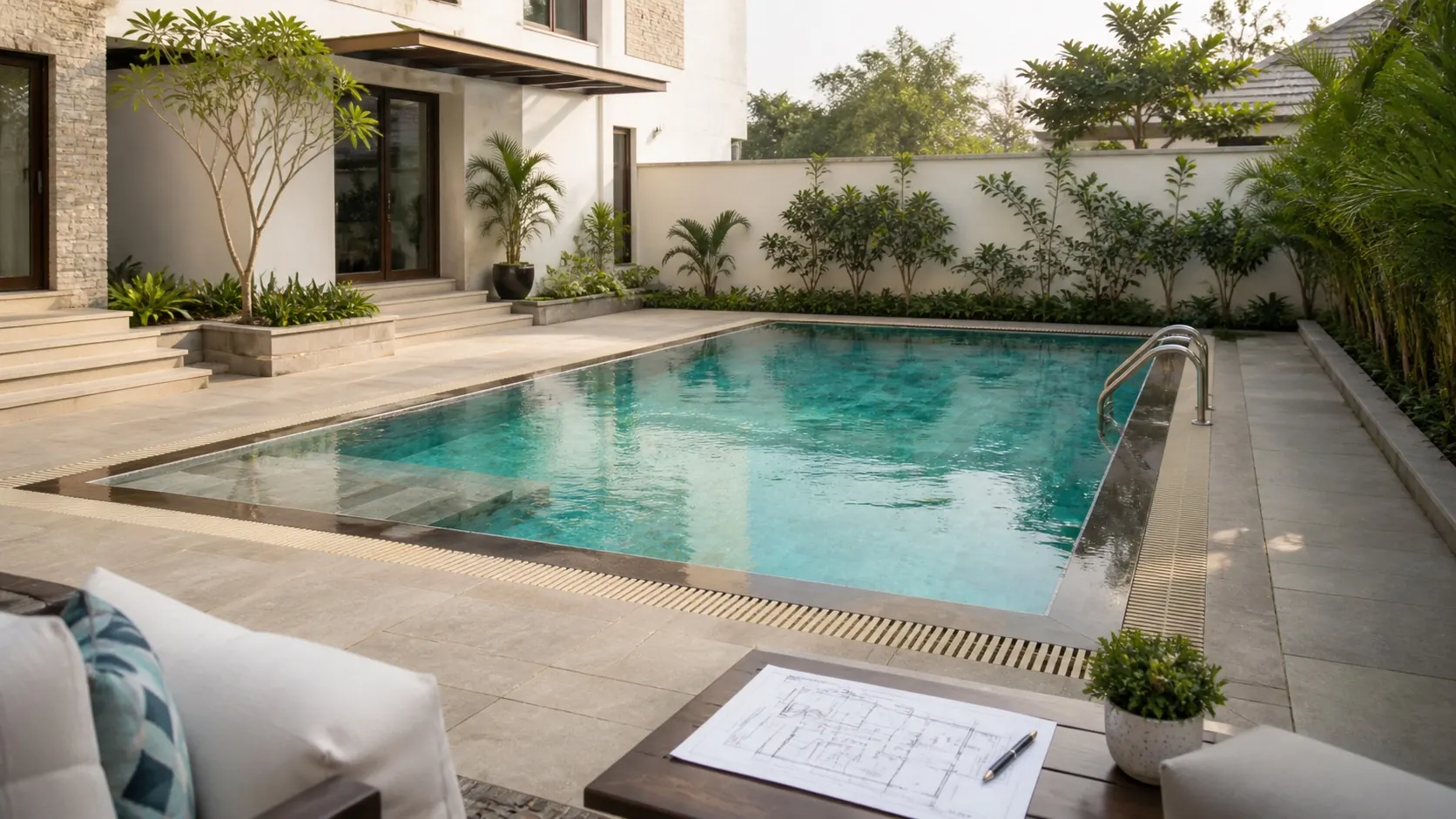
A residential swimming pool is a maintained water facility, not simply a blue shape on a plot plan. Its usefulness depends on controlled access, a workable deck, functioning equipment and a clear responsibility for care. Evaluate those conditions whether you are planning a new pool or buying a house with one already in place.
Pool direction: separate tradition from water safety
Some Vastu traditions favour the North-East for water features, including pools. This is a traditional placement preference. It does not establish whether a pool is safe, properly constructed or suitable for a property, and it cannot prevent an accident.
For a proposed pool, discuss site feasibility, permissions, drainage, services and barriers with qualified pool and building professionals before treating a compass position as a design decision. An existing pool is rarely a simple object to relocate. A pool in another direction should be assessed on its actual condition and use, not abandoned or rebuilt merely to match a diagram.
Access control and supervision come first
Have barriers and gates assessed against the requirements applicable to the property. Keep gates functioning and do not prop them open for convenience. Furniture and landscaping should not provide a way around or over the barrier.
Designate an adult to watch children whenever they are in or near the water, without distractions. Barriers do not replace supervision. Keep children away from drains and suction outlets, and do not use a pool with a loose, broken or missing drain cover. Obtain qualified assistance rather than attempting a makeshift repair.
The CPSC Pool Safely checklist also covers swimming instruction, appropriate safety devices and CPR training. Use it alongside local requirements and professional advice, not a Vastu plan as a substitute for water-safety measures.
A deck that works when people and furniture are present
Trace the route from the house to the pool gate, changing area and outdoor seating. Check it with loungers in use and towels or bags where people normally put them. A row of decorative planters should not force someone to squeeze along the water's edge.
Choose and maintain surfaces intended for wet poolside use, with appropriate professional advice about slip resistance and drainage. No surface should be treated as slip-proof. Investigate damaged tiles, loose edges or persistent puddles instead of hiding them with a mat. Keep hoses and cleaning equipment out of the route used by swimmers.
Provide a place for towels and footwear outside the gate's movement. When choosing seating, consider the view across the water as well as shade and comfort. Privacy screening should not hide the pool from the person supervising it or obstruct maintenance access.
Separate deck drainage from pool-water care
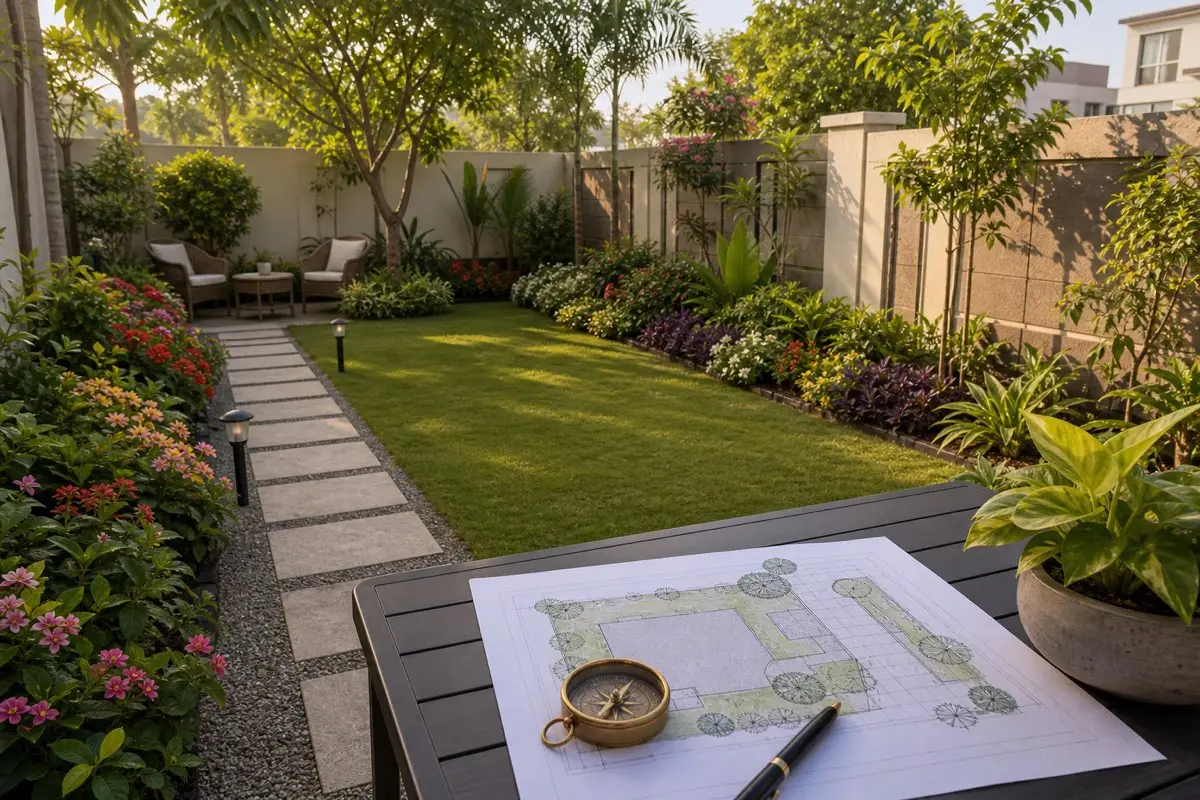
Rainwater running across the deck and water circulating through the pool are different systems. Note where surface runoff collects and whether soil or garden irrigation washes toward the pool. Ask a qualified professional to assess problems; do not improvise a new outlet or discharge pool water into a neighbour's property.
Clear-looking water is not a maintenance record. Follow a competent pool-care plan for testing, treatment and equipment operation appropriate to the installation. This page does not prescribe chemical quantities or filtration settings. Keep pool chemicals secured and handled according to their labels, apart from ordinary garden supplies and children's access.
For an existing property, ask who currently maintains the pool and obtain the available service information. A buyer should know how recurring care will be arranged, not just whether the pool photographs well. If operation or water condition is in doubt, pause use and obtain qualified advice.
Filtration equipment and lighting need their own space
Leave access to the pump, filtration equipment, valves and service enclosure. A screen that hides machinery should not prevent the ventilation or working clearance required for that installation. Record where equipment instructions and service contacts are kept, and ensure the responsible adults know whom to call if a fault appears.
Do not move equipment or reroute electrical supplies to place them in a preferred directional zone. Pool electrical work and lighting need appropriately qualified professionals. A domestic extension lead across the deck is not a pool-lighting solution.
Check the view at the time the pool is used. Lighting should make access and the water area visible without strong reflected glare or dazzling neighbours. Discuss inadequate lighting with a pool professional rather than compensating with loose household lamps near the water.
Illustrative example: a pool whose location cannot change
Imagine an existing residential pool on the west side of a house. The household prefers a North-East location according to tradition, but relocation would require major construction. During a practical review, they notice a gate that is routinely wedged open, loungers narrowing the deck and stored garden items blocking the equipment enclosure.
The justified next steps are to restore proper controlled access, obtain checks where hardware or safety measures are deficient, reorganize furniture and clear service access. A pool specialist should review maintenance and any defects. Those actions address identifiable problems without claiming that symbolic objects elsewhere on the plot can correct water safety.

Residential pool questions
Direction alone is not a practical reason to undertake major relocation. Review access, condition, drainage and ongoing care with qualified professionals. Traditional location preferences do not override those assessments.
No. Planting is not a substitute for a suitable safety barrier. Keep landscaping from defeating the barrier or blocking the supervising adult's view, and have the required protection assessed locally.
Request available maintenance records, equipment information and details of access controls. Arrange an appropriate pool inspection and establish who will handle routine care after purchase. A preferred compass location is not evidence of good condition.
Only if the installation's ventilation, service clearance and access requirements remain satisfied. Ask the pool professional before adding an enclosure; visual tidiness should not make equipment inaccessible.
No. Access, visibility, supervision and the pool's operating condition all matter. Have unsuitable or faulty lighting assessed rather than bringing improvised electrical equipment to the deck.
Changes to pool structures and services
This site is educational only. If your concern involves structure, waterproofing, electrical safety, gas lines, or major plumbing, consult qualified professionals before making changes. Many “Vastu problems” people experience in real life are actually practical building issues: dampness from leaks, poor ventilation, unsafe wiring, or blocked drainage. Fixing those basics often improves comfort immediately.