
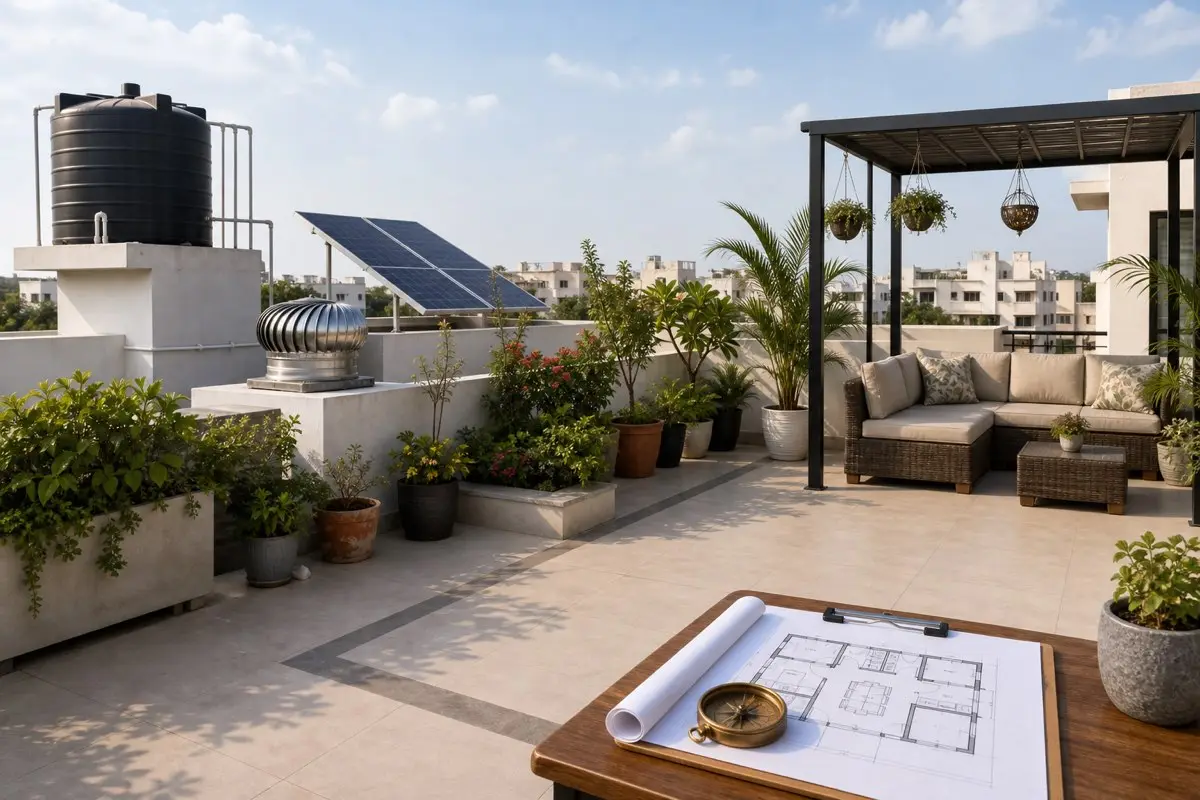
A terrace is first part of a building and may also carry water tanks, solar equipment, drainage outlets and access routes. Seating and planting should fit around those functions. A roof that can be reached by stairs is not automatically approved for a garden, gathering space or additional storage.
Confirm permitted use before arranging the terrace
Check whether the area is private, shared or reserved for services. In an apartment building, speak to the association or manager about permitted furniture, planting, access and alterations. A common terrace should not become a private garden that prevents other residents or maintenance staff from using it.
Some Vastu traditions prefer keeping the North-East lighter or more open when arranging a terrace. Treat that as traditional guidance, not a rule about where a roof can safely carry weight. Structural capacity, waterproofing, edge protection and maintenance access take priority over symbolic placement.
For substantial planters, gatherings, stored materials or a new shade structure, consult the appropriate qualified professionals before proceeding. Do not infer capacity from a roof photograph or from the fact that an existing tank is already there. This guide does not provide loading calculations or structural specifications.
Reserve service paths before choosing seating
Walk the route from the access door to every item that needs attention: water tank, pump, solar installation, drainage outlet and other rooftop services. Check the space needed to open a cover or carry tools. A narrow route between decorative containers may not allow maintenance work.
Keep tank lids, valves and equipment access points identifiable and available. Do not drape plants over service equipment or use it to support furniture. Solar panels and associated wiring should remain under the care of competent installers; do not relocate, cover or attach a screen to them as part of a terrace makeover.
Locate ordinary seating outside these working areas. Leave a straightforward way back to the stair or access door even when chairs are occupied. Store loose furniture only where it will not obstruct the door, emergency access or the next scheduled service visit.
Protect waterproofing and keep outlets visible
Before placing furniture, inspect the accessible surface for visible damage and report signs of leakage. Do not hide a suspect area under outdoor carpet, decking or a line of pots. If water appears in the room below, an appropriate building professional should investigate the source rather than applying a decorative covering above it.
Plan how the surface beneath containers will be inspected and cleaned. Heavy containers that cannot be moved can make that difficult. Discuss compatible protective supports with the waterproofing specialist instead of improvising attachments or dragging rough planter bases across the finish.
Keep leaves and potting material out of rainwater outlets. Include a check before wet weather and after storms when it is safe to access the terrace. Do not drill into the slab, cut drainage channels or fasten a pergola through waterproofing without an assessed design and proper installation.
Edges, wind and shade are building constraints
A parapet must remain an effective protective edge. Keep climbable furniture and planters away from it, and report damaged or inadequate guarding. Do not place seats on the parapet or turn it into a display shelf. Children need supervision; pots and screens are not substitutes for suitable edge protection.
Rooftops can be exposed to stronger wind than sheltered ground-level spaces. An umbrella, screen or lightweight chair can become a hazard if unsuitable or unsecured. Follow the product's limitations and the building's requirements; an improvised tie to a pipe is not an approved fixing.
Shade structures need attention to anchoring, wind exposure and permissions, not only appearance. Have the proposed installation assessed rather than weighing it down with miscellaneous heavy objects. Plan a safe way to remove or store movable shade when required, without going onto an exposed roof during dangerous weather.
Heat and planting without losing the terrace's purpose
Visit at the hours you expect to sit outside. Check reflected glare, the temperature of seating and whether any permitted shade actually covers the occupied area. A terrace arranged for early evening may be uncomfortable at midday. Select use times and appropriate furniture accordingly.
If planting is allowed, start with a manageable arrangement whose filled weight and placement have been considered professionally where needed. Keep watering separate from equipment zones and avoid unnecessary stored water. A rooftop garden should not require climbing over pots to reach the rainwater outlet.
Illustrative example: planters beside rooftop services
Consider a terrace with an existing tank, solar equipment and two drainage outlets. A household wants seating and several large containers. The first drawing should show service access and the outlet locations, leaving those areas available. Only then should it mark a possible sitting area and the planting proposal for approval.
If one planned container would cover an outlet and another would obstruct a tank-service route, omit or relocate them subject to the building assessment. Do not shift the tank or add weight elsewhere merely to maintain a preferred direction pattern. The terrace can remain useful with fewer objects and a clear maintenance plan.

Terrace-use questions
No. The existing tank does not establish capacity for a new load in another place. Describe the proposed containers and contents to a qualified structural professional and confirm building permission first.
Outside the routes and working areas needed to inspect and service that equipment. Check access with chairs occupied and equipment covers open, not just with furniture pushed aside.
Investigate and repair the defect first. A covering can hide the area that needs inspection and complicate later repairs. Choose any new surface with advice appropriate to the roof's waterproofing system.
Not necessarily. Its use, wind exposure, anchoring and storage can affect safety and shared access. Check the building rules and product limitations before bringing it onto the roof.
Before structural or waterproofing changes
This site is educational only. If your concern involves structure, waterproofing, electrical safety, gas lines, or major plumbing, consult qualified professionals before making changes. Many “Vastu problems” people experience in real life are actually practical building issues: dampness from leaks, poor ventilation, unsafe wiring, or blocked drainage. Fixing those basics often improves comfort immediately.