
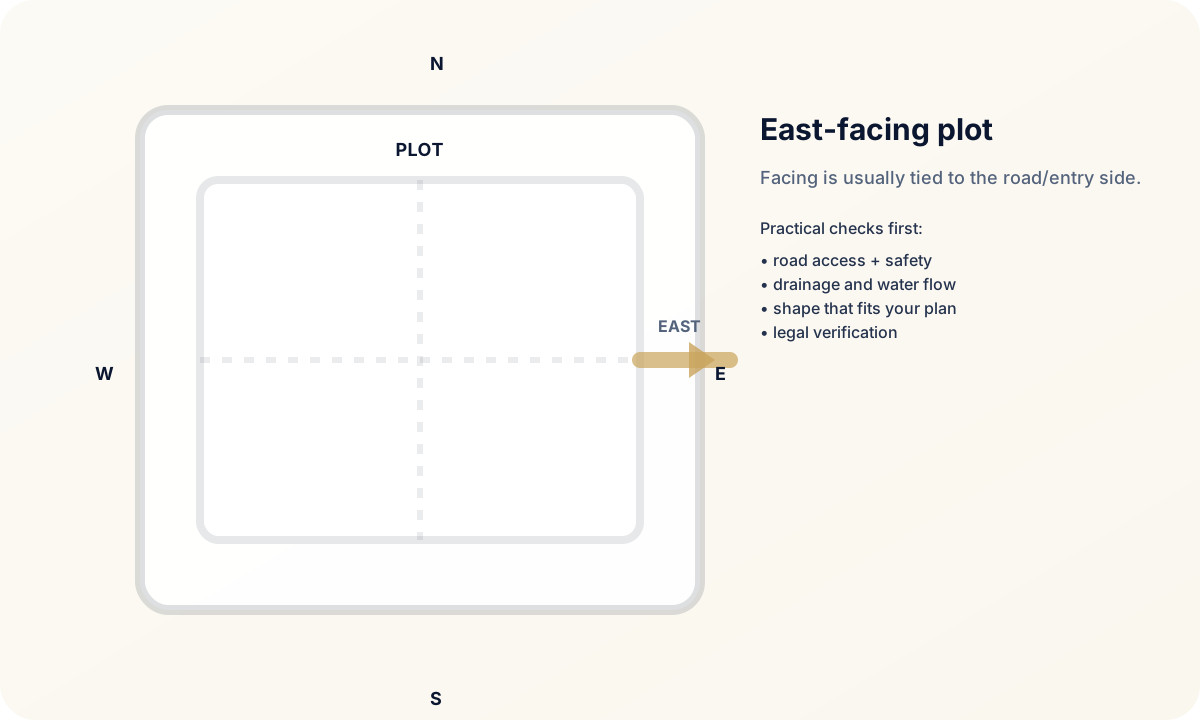
An east-facing label describes an orientation, not the quality of the whole plan. Use the entrance definition below, then compare the actual facade, room arrangement and available morning light. Traditional Vastu room preferences are cultural guidance, not guarantees of luck, wealth or health.
Why east-facing homes are popular
East is associated with sunrise, morning light, freshness, and new beginnings. In practical terms, an east-facing home can receive pleasant morning light, especially if the entrance or living area opens toward the east. This can make the home feel bright early in the day. However, east-facing does not automatically mean perfect. A good east-facing home still needs sensible room placement, clean entrance flow, ventilation, privacy, and usable storage. A poorly planned east-facing property can feel uncomfortable if the kitchen is smoky, toilets are badly placed, or the centre is blocked.
How to confirm east-facing direction
Stand inside the home at the main door and look outward. If you face east, the home is commonly called east-facing. In apartments, check the flat entrance, not only the balcony or tower direction. In plots, check road approach and future gate placement. Confirm using a floor plan with north arrow, Google Maps, and compass cross-check away from metal; the detailed method is explained in How to Check Directions Correctly.
Room placement checklist
For east-facing homes, keep the entrance clean and bright. Living room may work well near east or north-east if privacy is maintained. Kitchen is often preferred in South-East; use Kitchen Vastu Dos and Don'ts for the detailed stove, sink, and colour checklist. Master bedroom can work in South-West. Pooja room is commonly preferred in North-East. Toilets should be checked carefully for ventilation and distance from sacred or cooking areas. Heavy storage can sit in south or west where possible.
Buying checklist for east-facing homes
Do not buy only because the label says east-facing. Check the first view after opening the main door. Check whether morning light is actually available or blocked by another building. Check kitchen exhaust, bedroom privacy, bathroom smell, corridor condition, and parking approach. If buying a plot, check slope, drainage, and whether a balanced layout can be built.
Common myths about east-facing homes
The biggest myth is that every east-facing home is automatically lucky. Facing helps only when the plan supports it. Another myth is that no remedy is needed in an east-facing home. If the entrance is cluttered, the centre is blocked, or the kitchen is badly arranged, practical corrections are still needed.
Illustrative example: an east-facing home with a fixed entrance
Consider an independent house whose existing main door faces east, but opens beside a shoe cabinet and directly toward the living-room seating. Keep the approved entrance and room layout as the starting point. Check the full door movement, where visitors stand and whether furniture can provide privacy without narrowing the route inside.
The east gate does not tell you whether the kitchen exhaust works or whether nearby buildings shade the living room. Observe both on the visit. This is a planning example, not a report that a change of furniture produced a particular outcome.
Review the east facade before moving rooms
Check where the main entrance sits along the east-facing facade, not only which direction the facade faces. Record its relationship to the gate, parking and living-room windows. A traditional preference for an entrance position should be discussed against the real wall, structure and access requirements; it is not permission to cut a new doorway.
Do not relocate a functioning kitchen or bedroom merely to make every room match a diagram. Start with the room-planning checklist and distinguish approved fixed features from furniture choices.
Compare an east-facing flat with an east-facing house
In a flat, the entrance may face a shared corridor while the east balcony is on another side of the building. Ask for the individual flat plan, and assess privacy at that actual doorway. Common corridors, shafts and exterior walls are not freely alterable parts of the interior.
In an independent house, the plot gate, front door and road can describe different orientations. Trace the route between them and check what space remains for rooms after setbacks and other local requirements. Do not use the same purchase checklist without recognizing that difference.
Use two observations of the morning light
During a morning visit, note which east-side windows illuminate a usable surface: the living-room seats, a breakfast table or a desk. A bright external facade does not establish that light reaches the rooms behind it. Observe neighbouring walls, balconies and shade rather than relying on the sales photograph.
Return at another relevant time if possible. Check whether curtains needed for privacy would remove the daylight you expected. Decide on window coverings and furniture using those observations, while keeping ventilation openings available.
Separate the facing label from alteration costs
For an east-facing purchase, list any proposed entrance or room change beside the reason for it. Ask whether the current arrangement already works and whether the change is actually permitted. Have structural or service alterations assessed before including them in a budget.
Keep the approved plan and the observed layout together. If the advertised east entry is really an east balcony, ask for clarification rather than evaluating the wrong entrance. A direction preference cannot resolve a discrepancy in the property information.
East-facing assumptions worth checking
Do not assume sunrise will be visible from every room, that an east-side gate determines a flat door, or that an east-facing home needs no privacy screening. Each is a different site question.
Another mistake is maximizing openness at the front without considering the street view into the living room. Check sightlines with the door open and closed before selecting a screen or moving seating.
East-facing home deep dive for Indian buyers
East-facing homes are often marketed as premium, but the premium label should be earned by the full plan. During a visit, check whether the main door actually faces east or whether only the balcony receives east light. In many apartment projects, buyers hear phrases like east open, east balcony, east entry, and east-facing tower. These are not always the same. For Vastu, define clearly what you are checking: the main entrance, the balcony, the road, or the plot gate.
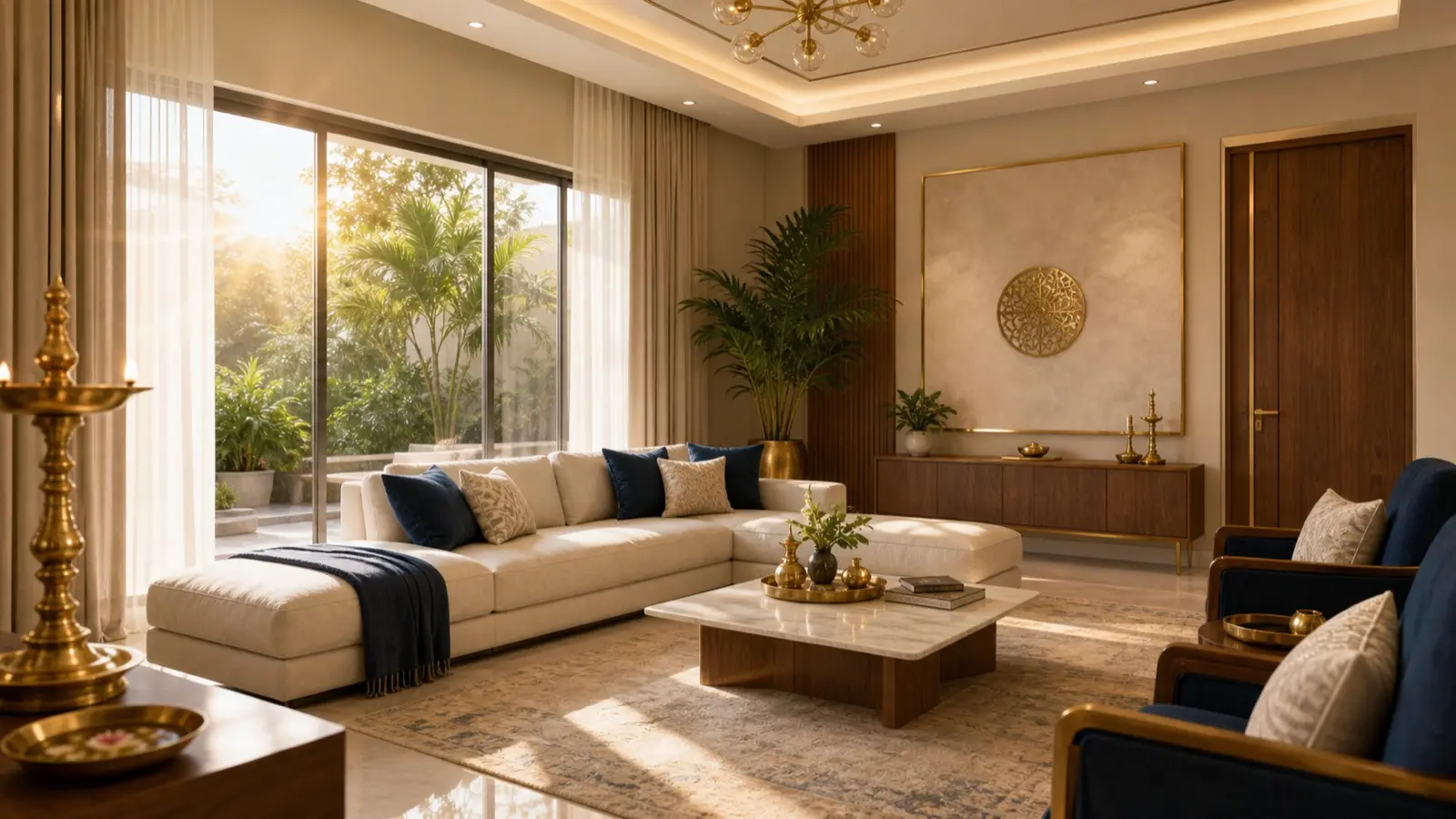
Morning light is a real advantage when it enters usable spaces. A living room with soft morning light can feel fresh. A pooja corner in a clean North-East can feel peaceful. A study desk near gentle daylight can support routine. But if a neighbouring building blocks all light, or if the entry is dark and cramped, the east-facing label loses practical value. Always observe the actual condition, not only the direction.
For families buying independent houses, also check whether the east side is too open without privacy. A good entrance should feel welcoming but not exposed. Use grills, landscape, curtains, or a foyer where needed. For plots, ask whether the final building can still keep a balanced South-West, workable kitchen, and open North-East. A good plot direction needs a good building plan.
Morning sun and changing shade
An east-side window may behave differently with seasonal shade, neighbouring vegetation or changes to nearby buildings. Note where the useful morning light actually falls and whether glare reaches a television or desk. Adjustable coverings may suit a room better than keeping it permanently closed.
For an exposed entrance, observe rain protection and the route from gate to door as well as sunshine. Any canopy or exterior alteration needs appropriate approval and installation.
Use the east-side rooms for the household that lives there
An early-rising household may value morning light in a breakfast or sitting area; someone sleeping after a night shift may need effective light control in an east-side bedroom. Work from the actual routine rather than insisting that every east-facing room remain bright all morning.
If prayer, study and visitor seating compete for the same front room, reserve their required space on the plan. Do not put a prayer shelf or desk into the entrance route just to obtain a preferred corner.
Adapt a fixed east entrance without rebuilding
A shallow landing place for keys, adjusted seating or a suitable curtain may address an exposed view into the home. Test the arrangement with the main door fully open and with someone arriving. Avoid replacing one obstruction with a larger screen.
These changes address access and privacy. They do not change the legal layout or guarantee benefits from facing east, and they cannot repair a drainage or structural defect.
Questions for the east-facing viewing
Which opening was used to label the property east-facing? Does its plan agree with what you observed? Which rooms receive morning light, and what blocks it? Can visitors enter without passing through a private activity area?
Finally, identify any alteration you believe is necessary and who can confirm its feasibility. Keep a preferred direction separate from unresolved maintenance, approval or access questions when deciding whether the home suits you.
An east-facing plan needs more than an east arrow
Retain the distinction between entry direction, daylight and room use throughout the review. The strongest east-facing option is the one whose actual plan suits the household, with realistic privacy, service access and permitted adaptations. A desirable marketing label is not a substitute for those checks.
FAQ
Is an east-facing balcony enough to call the flat entrance east-facing?
No. Check the direction you face looking outward from the flat's main door. Record the balcony separately; it may face a different side.
Must the door be moved to another part of the east facade?
Not simply to satisfy a traditional preference. Review the existing access and obtain professional assessment and approvals before any doorway alteration.
Why is an east-facing living room still dark in the morning?
Nearby buildings, balconies, trees and the window arrangement may block light. Observe the actual room rather than assuming its facing ensures daylight.
Can a fixed kitchen remain outside the traditionally preferred zone?
Assess its ventilation, services and usability first. A traditional location preference alone does not justify moving a working kitchen or altering shared plumbing.
Related guides for deeper reading
Direction help
Home planning
More Vastu guides to read next
Home and layout
Home Vastu, Apartment Vastu, Balanced Layout, Small Apartment Vastu
Directions and buying
Check Directions, Main Door Vastu, East-Facing House, North-Facing House
Room-wise help
Kitchen Vastu, Bedroom Vastu, Bathroom Vastu, Pooja Room Vastu
Focus and work
Study Room Vastu, Home Office Vastu, Wealth Vastu, Office Vastu
Remedies and support
Vastu Remedies, No-Demolition Remedies, Vastu FAQ, Trust and Support
Popular blog topics
Kitchen Do's and Don'ts, Mirror Vastu, Vastu Plants, Brahmasthan Vastu
Conclusion
Keep the east-facing orientation in perspective: identify the correct entrance, inspect morning light and test the existing room plan. Preserve what works and investigate specific access, privacy or service problems before planning changes. Traditional preferences can inform the conversation, but they do not guarantee the quality of a home.