
Quick rule (beginner)
Prioritise a correct cooking zone + safe sink position + clean storage flow.
Modern reality
You can’t always “move the kitchen”. Use workarounds that improve function and reduce conflict zones.
Best approach
Measure directions correctly, mark NE/SE/SW/NW on a plan, then adjust placements inside your kitchen.
Why Kitchen Vastu matters (in a modern home)
In India, the kitchen is not just a room—it’s a daily rhythm. Morning tea, school tiffins, lunch prep, evening snacks, late-night water, festival cooking, and weekend batching. When the kitchen layout is stressful, the whole home feels stressful. Many people describe it as “tension”, but often it’s simply poor flow: heat and water too close, cluttered counters, bad ventilation, or sharp traffic cuts through the cooking zone.
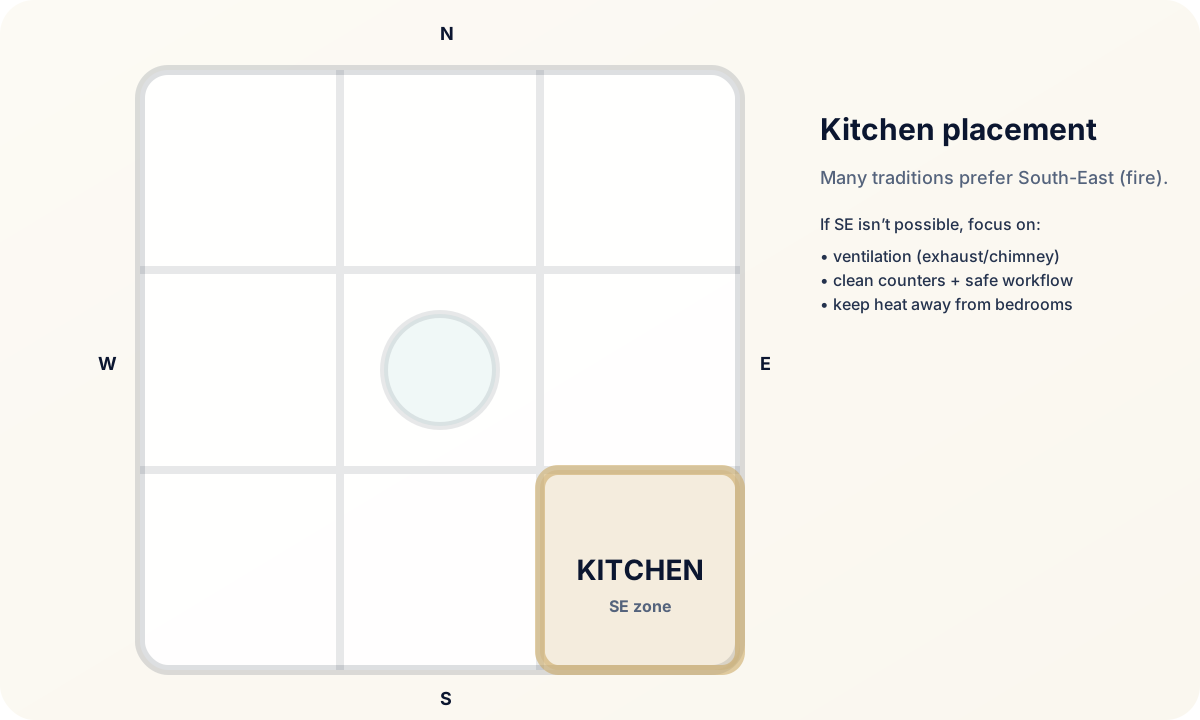
Vastu gives a directional way to think about this. Fire (cooking) is typically associated with South-East. Water is generally associated with North/North-East. Heavy storage is often kept in South/West. You don’t have to be perfect to feel improvement—especially in flats where structural changes are limited.
Step 1: Confirm the kitchen zone correctly (don’t guess)
A common mistake is to look at a floor plan and assume the top side is north. Another is to stand inside a flat and trust a phone compass reading near the fridge, lift lobby, or electrical panel—where readings can jump. If your directions are wrong, your Vastu “fix” will also be wrong.
Fast way (flat owners)
- Get your floor plan with a north arrow
- Mark the kitchen rectangle on the plan
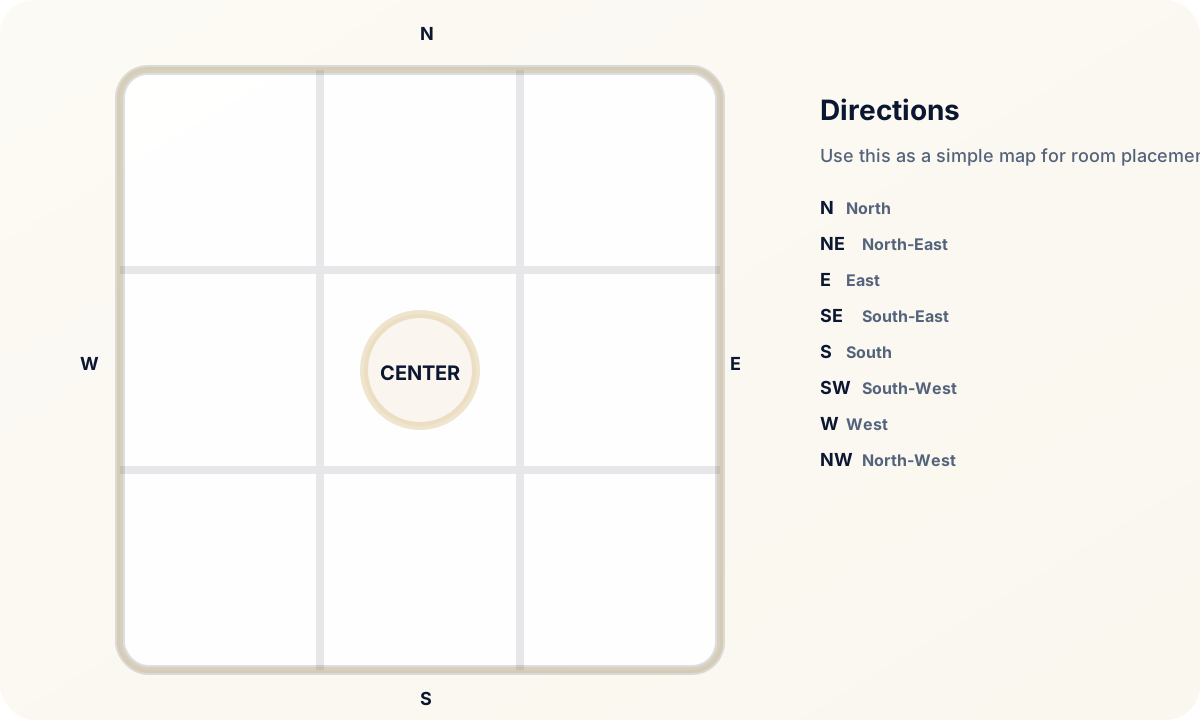
- Label corners: NE, SE, SW, NW
- Now apply the rules inside the kitchen
Cross-check (plots / houses)
- Use Google Maps to confirm north
- Use a magnetic compass outside (if possible)
- Mark the kitchen zone on a sketch
- Compare both methods for consistency
Deep dive: How to Check Directions Correctly.
Kitchen Vastu do’s and don’ts (practical and modern)
Think of your kitchen as three mini-zones: (1) cooking heat zone, (2) water cleaning zone, and (3) storage zone. Your goal is to reduce conflict between heat and water, keep circulation smooth, and make daily cleaning easy. The lists below are written with typical Indian kitchens in mind: LPG + induction mix, heavy masala storage, wet and dry bins, and frequent frying.
Do (high impact)
- Place the cooktop in the South-East side of the kitchen when possible
- Cook facing east (or north as a second preference if east is impossible)
- Keep the sink and RO/water filter away from the cooktop (separate the water and fire zones)
- Use good exhaust + cross ventilation (especially for open kitchens)
- Keep heavier storage to the south/west side of the kitchen
- Keep the kitchen bright and dry; fix leakage quickly
Don’t (avoid these)
- Don’t place the cooktop in the North-East corner if you can avoid it
- Don’t put sink and stove touching (heat–water conflict + messy maintenance)
- Don’t keep a dustbin right next to the cooking zone (smell + hygiene)
- Don’t store heavy items above the stove (safety + oppressive feeling)
- Don’t block the kitchen entrance with tall storage
- Don’t tolerate chronic clutter on counters (it ruins flow)
Placement guide: stove, sink, fridge, microwave, RO, and dustbin
Modern kitchens include many appliances, and the right placement is as much about safety as it is about Vastu. Use the guide below as a priority list. If you can’t follow all rules, follow the first two: keep cooking in the “fire” side (often SE) and keep water slightly away from the fire.
Cooktop (Gas / Induction)
Prefer South-East side. Keep a small buffer from the wall for cleaning and safety. Maintain a clear working counter beside the stove for prep.
Sink + RO
Prefer North / North-East side of the kitchen. If plumbing is fixed, increase separation with counter distance or a divider between sink and stove.
Fridge
Keep it on the south/west side of the kitchen if possible. Leave breathing space behind the fridge; avoid placing it right at the entrance path.
Microwave / OTG
Place it away from water splashes and at a comfortable height. In open kitchens, avoid placing it where kids can reach easily.
Dustbin
Keep covered and away from the cooking heat zone. Best is inside a lower cabinet with ventilation, or in a utility area if you have one.
Pooja / water in kitchen
If your home has a separate pooja space, keep the kitchen purely functional. If not, use a clean, elevated shelf away from the stove and sink.
Modern kitchen layouts: what to do for L-shape, parallel, island, and open kitchens
Vastu was written in a different architectural era. Today, many Indian homes have compact kitchens, modular cabinets, and open-plan living spaces. The key is to translate principles into practical layout choices instead of chasing perfection.
L-shaped kitchens (most common in flats)
In an L-shape, the “corner” becomes important. If your kitchen is in the South-East zone of the home, try to place the cooktop on the east or south wall of the kitchen (within that SE zone). Place sink on the other arm of the L—ideally closer to north or north-east side of the kitchen.
Do
- Keep prep counter between sink and stove
- Use a chimney/exhaust if frying is frequent
- Keep spice rack near stove but not above flame
Don’t
- Don’t place sink and stove on the same small wall with no counter gap
- Don’t block the L corner with tall appliances
- Don’t keep wet cloths near electrical points
Parallel (galley) kitchens
A parallel kitchen has two counters facing each other. This is great for workflow but can create “clashing zones” if stove and sink face each other directly. If possible, place the sink and stove on different lines and offset them so you are not constantly working in a wet splash zone facing the flame zone.
Island kitchens (villa / large apartment)
Islands look premium, but Vastu-wise they need careful placement so the cooktop doesn’t land in an awkward zone (especially NE of the home). If the island hosts a cooktop, ensure strong ventilation and keep water points away. If the island is only for prep and serving, it’s easier: keep the stove on a wall in the SE side and use the island for clean prep and family seating.
Open kitchens (kitchen visible from living room)
Open kitchens are common in modern India and are great for light, but they demand stronger discipline: daily cleaning, covered dustbin, and controlled smells. Vastu aligns well with this: cleanliness is a “remedy” that actually works.
Do
Use a strong chimney, keep counters clear, and store oils inside cabinets.
Don’t
Don’t let the sink be visible and messy from the living area; it creates an “always unfinished” feel.
Upgrade
Add under-cabinet lighting and a simple backsplash—easy cleaning, better mood.
Kitchen Vastu colours (what works in Indian homes)
Colour is a “soft” Vastu lever—you can change it without breaking walls. For kitchens, choose colours that feel clean and energising, and that are easy to maintain in Indian cooking conditions (oil splashes, turmeric stains, daily washing).
Usually safe
- Warm whites, off-whites, and light creams
- Soft yellows (avoid very neon tones)
- Light earthy tones (beige, sand)
- Fresh greens (as accents, not too dark)
Avoid as main colour
- Very dark black/charcoal kitchens (can feel heavy and show dust)
- Intense red everywhere (can feel overstimulating)
- Very dull grey in low-light kitchens
- Multiple clashing colours (visual noise)
If you love darker cabinets, balance them with bright counters and good lighting. Many modern Indian kitchens use dark lower cabinets (practical for stains) and lighter upper cabinets (keeps the room airy). That’s a good “modern Vastu” compromise.
Comparison table: Traditional Vastu rule vs modern workaround
Use this table when your kitchen is fixed (common in apartments). The idea is not “perfect Vastu” but “better Vastu”—small improvements that reduce daily friction.
| Topic | Vastu preference | Why it matters (practical) | Modern workaround |
|---|---|---|---|
| Kitchen zone | South-East (or North-West as a second option) | Heat and activity stay contained; better flow | If zone is fixed, at least keep stove in SE side of the kitchen room |
| Stove vs sink | Separate fire and water | Less mess, safer cooking, calmer routine | Add counter gap, a tall board divider, or shift RO/dish rack away |
| Cooking direction | Cook facing east | Feels energising; better light in many homes | If not possible, face north; avoid facing south while cooking when feasible |
| Storage | Heavy in south/west | Better balance; easier access patterns | Move bulk grains/stock to lower cabinets on south/west side |
| Open kitchen hygiene | Clean and bright | Smell + clutter affects the entire living area | Covered bins, routine wipe-down, chimney, and lighting upgrade |
Common kitchen Vastu mistakes (seen in Indian flats)
Mistakes
- Phone compass readings taken near appliances (wrong directions)
- Sink and stove directly touching (especially in small modular setups)
- Dustbin next to stove or under the sink with no cleaning routine
- Broken exhaust/chimney used for months (smell stays in home)
- Dark kitchen + poor lighting (feels heavy and tiring)
- Storing medicines and cleaning chemicals near food
Fixes that feel “premium”
- One-week declutter: remove duplicate utensils and expired masalas
- Add under-cabinet lighting + warm ceiling light
- Two-bin system (wet/dry) and a quick nightly reset
- Keep a dedicated prep counter (even if small)
- Use labelled containers for grains and spices
- Keep floor dry; repair leakage immediately
Mini case studies (realistic modern scenarios)
Case 1: Open kitchen in a 2BHK flat (smell + stress)
A couple in Bengaluru had an open kitchen facing the living room. Vastu advice online made them anxious about “wrong direction”, but the real issue was daily smell and clutter. They upgraded chimney maintenance, moved the wet bin away from the stove, added warm under-cabinet lighting, and created a nightly 7-minute reset routine. The home felt calmer without changing a single wall.
Case 2: Sink and stove too close (constant mess)
In many Chennai and Hyderabad apartments, the builder puts sink and stove on the same small counter line. The family felt the kitchen was “always messy”. They added a prep board gap, moved the dish rack to a separate area, and kept the RO on the far side. This created separation between water and fire zones—both practically and in the Vastu sense.
Case 3: Kitchen is in North-West (can it work?)
Some Vastu schools accept North-West kitchens as a second option. In such homes, focus on stability: keep the cooking routine consistent, maintain cleanliness, and keep heavy storage to south/west within the kitchen. If the house overall is balanced, NW kitchens can still feel functional—especially when ventilation is strong.
Kitchen Vastu checklist (print-friendly)
Directions
- Kitchen zone confirmed on plan
- Stove positioned in SE side of kitchen
- Sink separated and not clashing
Hygiene
- No leakage; floor stays dry
- Bins covered; daily disposal routine
- Chimney/exhaust cleaned regularly
Flow
- Prep counter space exists
- Fridge doesn’t block entry path
- Storage is organised (labels/containers)
Internal links (recommended next reads)
Kitchen deep dive
Kitchen Vastu (room guide), Vastu remedies, Remedies without demolition
Home planning
Entry + rooms
Help
FAQ (Kitchen Vastu)
Which direction is best for the kitchen in Vastu?
Many Indian Vastu traditions prefer the kitchen in the South-East (Agni) zone. Some traditions also accept North-West as a second option. If your kitchen is fixed (common in flats), focus on placing the stove in the South-East side of the kitchen room and separating water from fire.
Where should the gas stove be placed as per Vastu?
Prefer placing the cooktop in the South-East side of the kitchen. Aim to cook facing east (or north if east is not possible). Keep the cooking counter organised, avoid placing heavy storage above the flame, and prioritise exhaust for Indian cooking.
Can the sink be next to the stove?
It’s best to avoid keeping the sink and stove touching because it creates constant wet–heat conflict and daily mess. If your modular setup forces it, create a counter gap, add a divider, shift the dish rack away, and keep the RO/water filter further from the stove.
Which colour is best for a kitchen in Vastu?
Light, clean colours usually work best for Indian kitchens: warm whites, creams, soft yellows, and light earthy tones. If you prefer dark cabinets, balance them with bright counters and strong lighting so the kitchen doesn’t feel heavy.
Is an open kitchen good as per Vastu?
Open kitchens can work well if you maintain hygiene and smell control. Keep bins covered, use a strong chimney/exhaust, and do a quick nightly reset. In practice, an open kitchen feels “premium” when it’s consistently tidy and well-lit.
How do I check the kitchen direction correctly in a flat?
The best method is the floor plan with a north arrow. Mark the kitchen area on the plan, label NE/SE/SW/NW corners, then apply rules. Phone compass readings inside flats can be inaccurate due to steel and wiring. Use them only as a cross-check near windows or balconies. See this guide.
What if my kitchen is in the North-East?
If you can’t change the room location, focus on reducing heat intensity in the NE: keep the stove away from the NE corner inside the kitchen, keep the area bright and clean, avoid clutter, and improve ventilation. Small improvements in routine and layout often help more than extreme “fear-based” advice.
What are the easiest kitchen Vastu remedies without demolition?
Start with practical fixes: declutter, fix leakage, improve lighting, add exhaust, separate sink and stove as much as possible, and use a covered bin. You can explore more in Remedies without demolition.
Which direction should I face while cooking?
Many traditions suggest facing east while cooking. If that isn’t possible due to modular layout, facing north is often used as a second preference. More importantly, keep the flame stable (no strong cross-wind) and ensure safe, comfortable working posture.
More Vastu guides to read next
Home and layout
Home Vastu, Apartment Vastu, Balanced Layout, Small Apartment Vastu
Directions and buying
Check Directions, Main Door Vastu, East-Facing House, North-Facing House
Room-wise help
Kitchen Vastu, Bedroom Vastu, Bathroom Vastu, Pooja Room Vastu
Focus and work
Study Room Vastu, Home Office Vastu, Wealth Vastu, Office Vastu
Remedies and support
Vastu Remedies, No-Demolition Remedies, Vastu FAQ, Trust and Support
Popular blog topics
Kitchen Do's and Don'ts, Mirror Vastu, Vastu Plants, Brahmasthan Vastu
Conclusion
Kitchen Vastu is easiest when you treat it as a “daily-life design system”: place cooking in the fire side, keep water separate, store heavy items in stable zones, and keep the room bright, dry, and easy to clean. In modern Indian flats, you may not change the kitchen room—but you can almost always improve what happens inside it.
If you want a complete room-by-room path, start from Home Vastu, then follow the checklist style in Room-wise Vastu, and use the examples in Balanced Layout for direction clarity.