
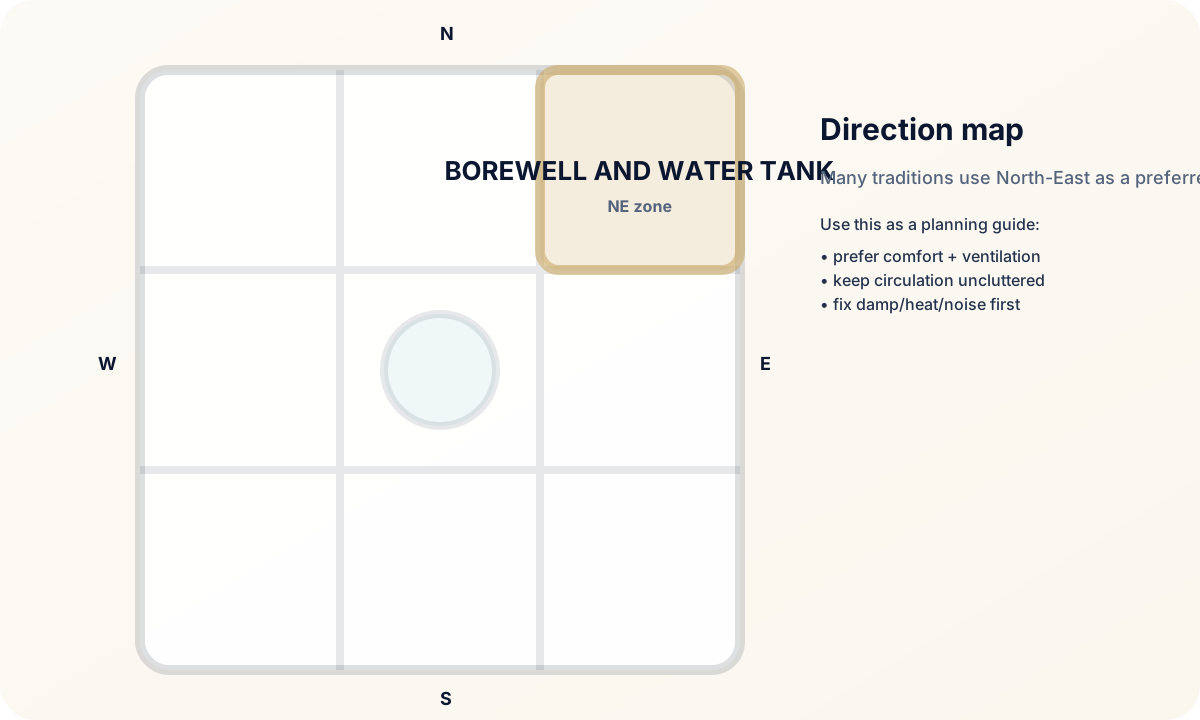
Identify whether you are reviewing an overhead tank, underground sump or water source before applying any placement advice. Traditional direction preferences do not establish structural capacity or water quality. Keep the existing distinction between those systems and arrange competent assessment for changes to their installation.
Why water placement matters
Water affects health, hygiene, storage, pressure, and maintenance. For room-level hot-water planning, read Geyser Vastu along with this water storage guide. In Vastu, water is linked with flow and life support. In construction, water tanks add weight and require careful plumbing. An overhead tank is heavy, while an underground sump is low and water-oriented. These two should not be treated the same.
Overhead water tank placement
Many Vastu traditions prefer heavier overhead tanks in stronger zones such as South-West or West, depending on the design, while avoiding overly loading North-East. Structurally, the tank must sit where the building can carry it safely. Never compromise engineering for symbolic placement. Waterproofing, access, overflow, and maintenance are essential.
Underground sump and borewell
Underground water features are often preferred in North or North-East by many traditions, but soil, municipal rules, plumbing, and site conditions matter. Borewell location should also consider geology, water availability, legal permissions, and safety. Do not place water features where contamination risk is high.
Water tank Vastu in apartments
Flat owners usually cannot control the building overhead tank or sump. Focus on what you can control: bathroom leaks, kitchen sink maintenance, RO placement, balcony drainage, and water storage hygiene. If the building has leakage or tank hygiene issues, raise it with the association because it affects all residents.
Common water tank mistakes
Common mistakes include leaking overhead tanks, ignored overflow pipes, damp terrace corners, dirty sumps, mosquito breeding, poor drainage, and placing heavy storage near water-damaged areas. These are practical defects and Vastu concerns. Water must be clean, contained, and well maintained.
Illustrative example: an overhead tank that must stay in place
Consider an existing house with an overhead tank whose approved support and pipework make relocation impractical. The owner notices recurring wet patches below the tank area. Record the observations from a safe, accessible position and ask the appropriate professional to investigate the tank, connections and surrounding waterproofing.
Keep the direction concern separate from the repair diagnosis. Do not shift the tank, add another tank or alter its supports as a remedy. This example describes a maintenance decision, not a claimed outcome from changing its location.
Keep inspection access available
Identify how authorized maintenance workers reach the tank and its service points. Do not turn that route into terrace storage or build a cabinet over a valve. Access must remain suitable for the actual work, not merely for seeing the tank from a distance.
Do not climb onto an insecure cover or enter a tank or sump to inspect it. Enclosed tanks can present confined-space hazards; use competent services with appropriate procedures.
Distinguish the storage components in the records
For an overhead tank, record its approved location and the responsible maintenance contact without attempting load calculations. For an underground sump, identify its protected access and how surface water is kept from entering. A borewell is a water source, not the same thing as either storage container.
Use separate notes for these components so a concern about one does not lead to unrelated work on another. A professional reviewing a leak needs to know which part of the system is involved.
Prepare useful observations for a service visit
Record when a leak or overflow occurs, where it is visible and whether it follows filling or rain. Photographs taken from a safe position may help explain the location. Do not dismantle fittings or access unsafe roof areas to obtain them.
Ask the service provider to distinguish the source from damage appearing elsewhere. Keep their findings and completed-work record with the property documents, including any follow-up they recommend. A fixed location does not prevent investigating a genuine defect.
Ask about tank maintenance when reviewing a property
Find out who maintains the tank, when it was last inspected or serviced and whether recurring leaks have been reported. Ask how access is arranged and whether alterations to the system have appropriate documentation.
For a flat, direct shared-system questions to building management rather than assuming the seller controls the overhead tank. A preferred compass location is not a substitute for maintenance information or an assessment of unresolved defects.
Do not confuse clear-looking water with verified quality
Appearance alone cannot establish water quality. The CDC safe-water storage guidance emphasizes protecting safe water from recontamination. Tank location by compass is not a water-quality test.
If contamination is suspected, obtain advice from the water supplier or appropriate local authority and follow their instructions. Do not add chemicals or prescribe a treatment from a Vastu article.
Water tank deep dive for plots, villas, and apartments
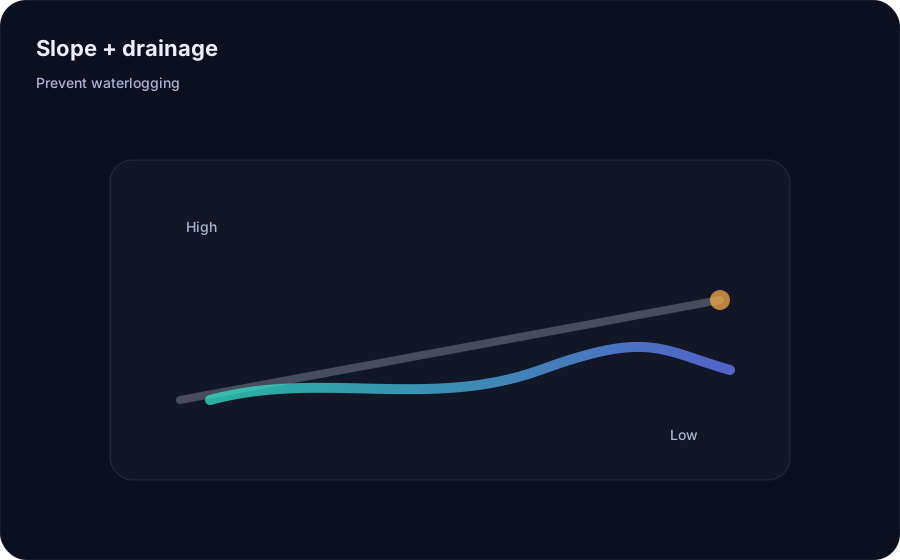
Water Tank Vastu must be handled with engineering seriousness. An overhead tank is heavy and should be placed only where the structure can support it safely. Vastu preferences should never override structural design. Ask an engineer before changing tank location. Check access for cleaning, overflow pipes, waterproofing, and whether leakage can damage bedrooms, electrical areas, or exterior walls.
Underground sumps, borewells, and water storage have different logic from overhead tanks. They relate to water collection, source, flow, and hygiene. Many traditions prefer underground water in North or North-East, but site conditions, municipal rules, contamination risk, and plumbing slope matter; for the directional meaning, read North-East Corner Vastu. A badly placed but clean and legal water source may be safer than a directionally preferred but contaminated one.
Apartment residents usually cannot control building tanks. Instead, check what you can control: RO placement, kitchen sink leaks, bathroom seepage, balcony drainage, washing machine outlet, and stored water hygiene. If society tank cleaning is irregular, raise it in the association. Water quality affects health directly, so practical maintenance is essential.
Watch for changes after rain or service work
Report new overflow, damaged covers or unusual wet patches through the responsible maintenance channel. Rain-related problems and filling-related problems may need different investigation; note timing instead of assuming the tank itself always causes dampness.
Maintenance schedules should follow the system's requirements and local guidance. Do not substitute an arbitrary calendar ritual for professional advice on inspection, cleaning or testing.
Assign responsibility in shared buildings
Residents should know where to report a tank problem and who can authorize access or service. Keep notices about work and any temporary supply arrangements available to the people affected.
Do not adjust shared pumps, valves or covers independently. Coordinate through management so one household's attempt to correct a directional concern does not disrupt the building's supply or maintenance arrangements.
What can be done when relocation is not realistic?
Review actual access, covers, leakage and service records with the responsible professional. Some concerns may call for maintenance rather than relocation, but the remedy depends on diagnosis.
Direction alone is not grounds to empty, shift or increase the capacity of a tank. Support, plumbing and waterproofing changes require appropriate assessment even if the intended move seems small.
Questions for the tank service provider
Which component needs attention? What evidence identifies the fault? Can inspection and service be completed safely through the existing access? What approvals or specialist input would any proposed change require?
Ask how completed work will be checked and what the household or association should monitor afterward. The HSE introduction to confined-space risks explains why entering an enclosed space is not an ordinary household maintenance task.
Reader-friendly summary
For final review, trace the full water path: source, storage, pump, pipes, taps, drains, overflow, and disposal. Vastu becomes practical when clean water enters properly, used water exits safely, and no dampness remains hidden in the building.
If the home has both an overhead tank and an underground sump, inspect them separately. One is about weight and pressure; the other is about collection and hygiene. Treating them as the same can lead to poor decisions.
During monsoon, check overflow lines carefully. Water spilling near walls, terraces, or foundations can create dampness that later appears inside rooms. Preventing water damage is one of the most practical forms of Water Tank Vastu.
Clean water management protects health, walls, money, and long-term home stability.
Review tanks regularly, especially before summer and monsoon seasons.
FAQ
Should overhead and underground tanks follow identical placement advice?
No. They have different structural, access and water-storage contexts. Traditional preferences also distinguish them; neither overrides engineering or contamination considerations.
Must an existing overhead tank be moved because it is outside a preferred zone?
Not on direction alone. Obtain qualified assessment of actual defects or proposed alterations, and retain approved supports and services unless properly changed.
Can residents clean a shared sump by climbing inside?
Do not enter a tank or sump as a household cleaning task. Arrange competent services through the responsible owner or association because enclosed spaces can be hazardous.
Does a north-east tank guarantee clean water?
No. Direction does not determine water quality. Appropriate protection, maintenance and any required testing or treatment must be handled separately.
What can a flat owner do about a leaking shared tank?
Report the location and timing to management from a safe position, request appropriate investigation and keep the follow-up record. Do not independently alter shared equipment.
Related guides for deeper reading
Water and plot
Borewell & Water Tank Vastu, Plot & Land Vastu, Plot Shape Analyzer
Home guides
More Vastu guides to read next
Home and layout
Home Vastu, Apartment Vastu, Balanced Layout, Small Apartment Vastu
Directions and buying
Check Directions, Main Door Vastu, East-Facing House, North-Facing House
Room-wise help
Kitchen Vastu, Bedroom Vastu, Bathroom Vastu, Pooja Room Vastu
Focus and work
Study Room Vastu, Home Office Vastu, Wealth Vastu, Office Vastu
Remedies and support
Vastu Remedies, No-Demolition Remedies, Vastu FAQ, Trust and Support
Popular blog topics
Kitchen Do's and Don'ts, Mirror Vastu, Vastu Plants, Brahmasthan Vastu
Conclusion
Keep overhead storage, underground sumps and water sources distinct when reviewing the property. Preserve approved installations, maintain access and investigate actual leakage or contamination concerns through qualified services. Traditional location guidance cannot establish structural safety or the quality of stored water.